Japanese automakers have become obsessed with the idea of ‘China Speed,’ which sounds like a made-up drug that has to be stopped in Rush Hour 6 but is actually just a way to describe the efficiency of that country’s manufacturing. Instead of waiting the typical 4-to-6 years (or longer) to develop and produce a new car, Chinese automakers seem to be able to get products to market in as fast as 24 months.
Nissan wants to be the first Japanese automaker to truly embrace China Speed with its next round of North American trucks. That desire for speed stands in contrast to another Japanese automaker, which is going to wait more than a decade to replace a key vehicle.
The downside of China Speed is that sometimes technology gets ahead of the government’s ability to regulate it, which is why Tesla is joining other carmakers in its biggest recall ever. Perhaps that speed is still better than the sluggishness of Volkswagen, which is apparently living in ‘Cloud-Cuckoo-Land’ with its visions of the future.
Nissan Can’t Hardly Wait
 Photo credit: Nissan
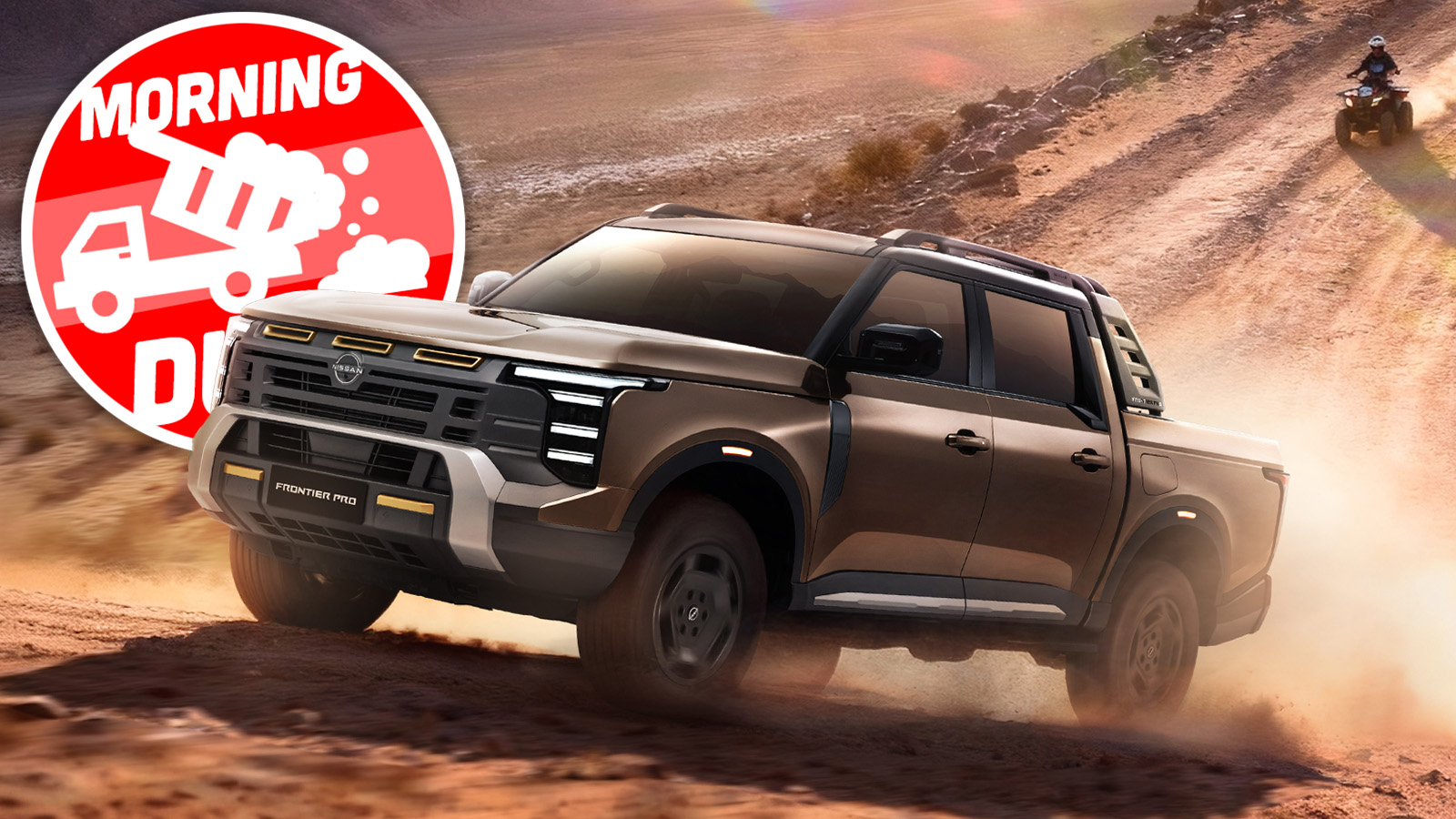
I 100% get it, and I am 83% on board. Nissan wants to build a new series of vehicles on a new body-on-frame platform, including a brand new Xterra. CEO Ivan Espinosa has only so long to prove he deserves the job, and waiting until 2033 to roll out a bunch of good products isn’t going to work.
Is 2028 too soon, though? According to Nikkei Asia, that’s where the company is heading with its Family Strategy, which involves creating a base platform and building models off of that, as opposed to building a lot of individual models. This is the modular approach used by Volkswagen and many other automakers, so it’s a little amusing that it’s taken Nissan this long to come around to it.
How much will it quicken the pace?
It aims to reduce that to 37 months for projects requiring development of a new platform, meaning a basic vehicle frame, and to 30 months for follow-on projects that use an existing platform.
To accelerate development, Nissan has overhauled the process. Previously, decision making often took longer because authority was split among three leaders responsible for profitability, product appeal and execution within each project. The company has since had its product planning and profitability leaders work as a team and leave engineers to focus on execution, enabling leaner and faster decision making.
Nissan uses AI and digital technologies as well to improve the efficiency of vehicle testing.
AI! Certainly nothing will go wrong by using AI. That never happens.
Unsurprisingly, Nissan is going to attempt this first in the United States. Automotive News had this to report:
The first of three product families will be frame-based trucks geared for the U.S. market and made at the Japanese carmaker’s Canton, Miss., plant. The lead nameplate, the revived Nissan XTerra, will land around 2028 and be followed by four sibling spinoffs by the end of the decade.
The advance puts Nissan Motor Co. in competition with Chinese rivals that are churning out cars in 24 months or even faster, a breakneck speed legacy players call China Speed.
Again, in abstract, this is a good idea. Super long development periods mean you’re often on your back foot as a car company, and if things change — tariffs, electric car subsidies — it’s painfully slow to switch directions.
On the other side of this, going too fast means the potential for huge quality risks. I don’t have any specific insight into whether or not Nissan can do this — it’s on the lower end of recalls by brands in the US — but history is history. Remember when Toyota rushed an electric car onto the market and the wheels started literally falling off the things? Remember the Fisker Ocean? [Ed Note: A body-on-frame vehicle using preexisting powertrains should be a lot simpler to crank out than an all-new EV. I think this is doable. -DT]
If Nissan can pull it off, it’ll be great — though it’s not worth it if the company can’t come close to nailing it on the first try.
The Mazda CX-30 Has Been Delayed Until At Least 2031
 Photo credit: Mazda
The Mazda CX-30 is a good car that’s basically impossible to sell at a competitive price in the United States after tariffs. As Japan’s Chugoku Shimbun (via Motor1) explains, that means we’re going to be waiting a while for a new one:
Mazda CEO Masahiro Moro told Japan’s Chugoku Shimbun that the next-generation model will not land until fiscal year 2030, which runs through March 2031.
That is a 12-year run for the current CX-30 without a full overhaul, an unusually long stretch even by Mazda’s conservative product cycles. Moro pinned the delay on cost pressure the automaker cannot ignore.
Cheap cars run on slim margins and, in the United States, that usually means foreign production. Now that foreign production is subject to higher tariffs, cheap cars are going to be a lot harder to come by.
China Moves To Fix The Damn Doors
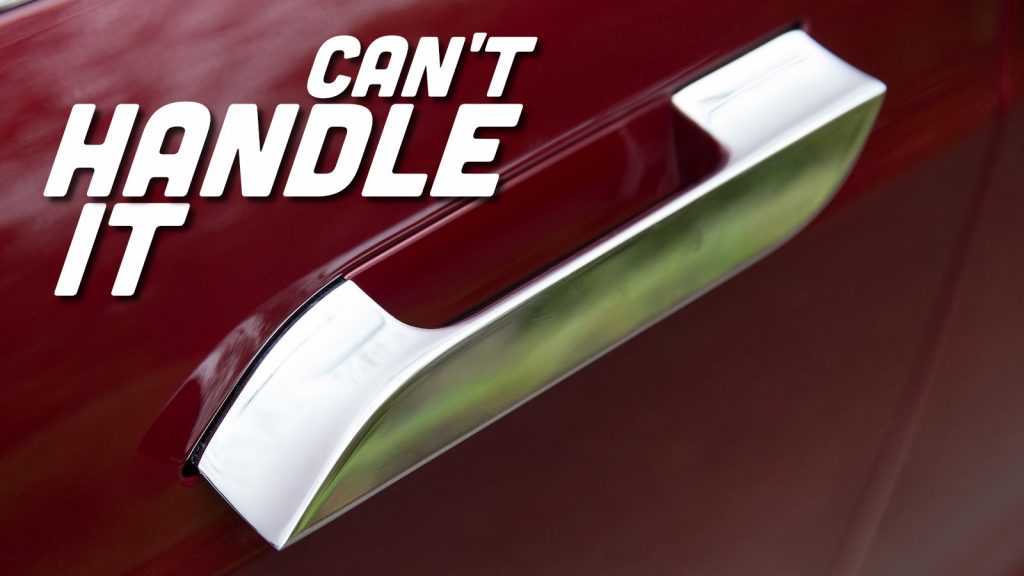
Motorized doors are largely dumb, and a solution to a problem that doesn’t exist. Even worse, in an accident they create a need for secondary systems to operate that are either difficult to locate in an emergency or don’t function at all.
China has decided to discourage the use of these doors in the future, and is now forcing Tesla, Xiaomi, and other automakers to recall vehicles to make it clearer how to escape and/or to reprogram systems to make them operate better.
Tesla is the largest participant in this round of recalls, with 2 recalls covering a combined 5,716,552 vehicles, according to CnEVPost’s calculations.
Of those, 2,975,910 vehicles are being recalled over the emergency mechanical door releases, effective September 25, 2026, including 973,156 domestically built Model 3s and 1,956,713 domestically built Model Ys.
Imported models account for 35,590 Model 3s, 8,328 Model Xs and 2,123 Model Ss.
Tesla will add warning labels free of charge and update the window control software via OTA to add a post-crash window-lowering strategy. Some vehicles that already carry the labels will not need them applied again.
I cannot wait for this era to end.
VW’s Management Is In ‘Cloud-Cuckoo-Land’

Volkswagen’s labor union leadership has accused the automaker’s management of operating in ‘Cloud-Cuckoo-Land,’ suggesting a serious disconnect between executive ambitions and the operational and financial realities the company currently faces. With Nissan sprinting toward a compressed development timeline and Mazda pumping the brakes on new models entirely, VW’s situation serves as a reminder that neither extreme — reckless speed nor paralyzed indecision — is a recipe for success in today’s automotive market.