
Overview
Fully revised for 2027, the Hyundai Tucson Hybrid plays in the popular and competitive compact hybrid SUV segment. Like class stalwarts such as the Honda CR-V Hybrid and the Toyota RAV4 Hybrid, it blends interior space, functionality, and an efficient powertrain at a competitive price point. The new 2027 model pursues this goal with 233 horsepower from its hybrid powertrain, a six-speed automatic transmission, and a choice of rear or all-wheel drive. Hyundai has indicated that it expects EPA ratings to be better than the outgoing model’s, which delivered 38 mpg combined in its most efficient guise.
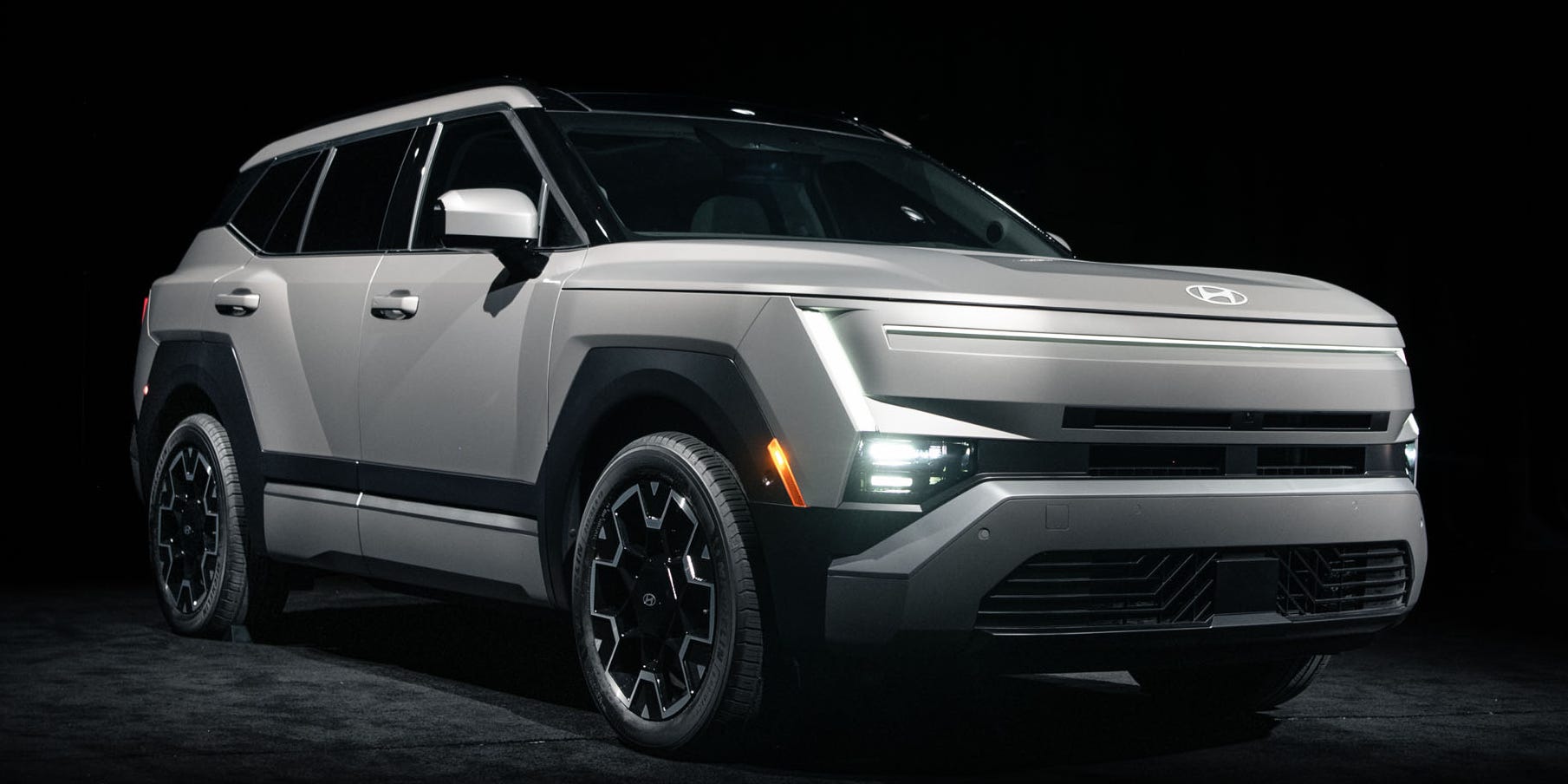
The new five-passenger interior takes a minimalist approach, playing off the blocky, almost brutalist exterior that replaces the smooth, aero-look of the previous model. We’ll report back on how this new version performs as soon as we get a chance to drive it.
Expert Tip: Hyundai says it currently has no plans to sell the new Tucson PHEV (Plug-In Hybrid) in the States, so the standard gasoline Tucson, which is also new for 2027, is the only alternative in the lineup. That version is reviewed separately.
What’s New for 2027?
Nearly everything. The 2027 Tucson Hybrid is approximately 2.4 inches longer, 1.6 inches wider, and 0.75 inches taller than the previous model. In addition to newly styled sheetmetal and updated interiors with fresh infotainment and technology features, the 2027 Tucson Hybrid gets a revised powertrain with two electric motors and a host of new standard and available driving assistance and safety technologies. Two new colors join the palette: Ranger Green Pearl/Matte and Kodiak Blue Pearl.
Engine, Transmission, and Performance
- Hybrid Powertrain: 1.6-liter four-cylinder and two electric motors, 233 hp combined
- Transmission: 6-speed automatic
- Drivetrains: Front-wheel drive, all-wheel drive
Hyundai says the 2027 Tucson Hybrid has a total output of 233 horsepower and 280 pound-feet of torque. Battery capacity is 1.49 kWh, unchanged from the previous version. An electric water pump is used to better control engine and electrical component cooling, and a new Stay Mode allows occupants to use the air conditioning, infotainment, and device charging on electrical power alone without the need for the gasoline engine to run.
0–60-MPH Times
- Claimed 0–60-mph Time: 8.5 seconds
In Comparison: Hyundai’s projected 8.5-second time for the Tucson Hybrid is quicker than the 9.5-second estimate for the also-new 2027 Tucson gasoline version, but both trail the Honda Civic Hybrid’s 7.1-second time.
Towing and Payload Capacity
- Max Towing: 3,000 pounds
The Tucson Hybrid’s 3,000-pound max tow rating for the all-wheel-drive version represents a 1,000-pound increase over the previous Tucson Hybrid. It also features Trailer Reverse Assist software that semi-automates the backing up of a trailer. Though it probably wouldn’t be a first choice for towing, there’s enough capacity here for personal watercraft, small campers, and the occasional utility trailer. No tow rating is given for the front-wheel-drive version.
In Comparison: The Tucson Hybrid easily out-tows the Honda CR-V Hybrid, which is limited to a max rating of 1,000 pounds.
Fuel Economy and Real-World MPG
- Manufacturer Estimated Combined Ratings: 38–42 mpg
The EPA hasn’t yet issued estimated fuel economy ratings for the 2027 Tucson Hybrid, but Hyundai says it is targeting 42 mpg for the front-wheel-drive model with 17-inch wheels — believed to be their combined mpg target. Versions equipped with larger wheels (18-, 19-, or 20-inch) and all-wheel drive will deliver slightly lower fuel mileage. Official EPA estimates and real-world fuel economy results will be added as soon as they are available.
In Comparison: The current Honda CR-V Hybrid is EPA-rated at 43 mpg city, 36 mpg highway, and 40 mpg combined for front-wheel-drive models, and 40 mpg city, 34 mpg highway, and 37 mpg combined for all-wheel-drive models.
Interior, Comfort, and Cargo
First Row: Hyundai moved the shift lever from the console to a single steering-column stalk, which allows for a slimmer console and a bit more knee room. Soft, round shapes stand in contrast to the muscled exterior design. A shelf occupies much of the dash real estate, and a squircle steering wheel finishes the look. An available massage function and single-button recline provide relaxation possibilities for front-seat riders.
Second Row: The second-row style follows that of the first; a 60/40 folding seatback helps manage cargo. An available three-zone climate control allows rear-seat passengers to dial in their own comfort settings.
With its larger footprint, the 2027 Tucson Hybrid promises meaningful gains in passenger and cargo space over its predecessor, making it a strong contender for families seeking a practical and efficient daily driver.