The most important kind of company to have as a nation was, for much of the 20th century, an automaker. It signified a level of technological achievement and manufacturing prowess that many leaders aspired to, with the added benefit of being able to be switched over to make bombs and tanks. That was something else people cared a lot about for the very good reason that the world had gone to war a couple of times.
Making cars remains a key industry, but far from the only one, or even the most valuable. So why are so many countries committed to building factories and never letting them go? Canada is doing what it can to save its car industry, Volkswagen’s overcapacity issue is both a political problem and a demand one, and there’s even talk of a Ford-based Bronco fighter. Could a Ford-built VW truck help? Maybe. What about an autonomous ID.Buzz? Softer maybe.
The World Can Build 57 Million More Cars Than It Needs
 Source: JLR
There’s a big opinion piece by Liam Denning in Bloomberg arguing that there’s far too much automotive factory capacity. This year the world will buy about 85 million new cars, but manufacturers can build 142 million vehicles — leaving a surplus of 57 million units.
Why does that matter? From the piece:
Building assembly lines is capital-intensive, so profitability rests on running them as much as possible to spread fixed costs across as many vehicles as possible. The breakeven point to cover costs, in terms of capacity utilization, isn’t set in stone, but industry analyst Glenn Mercer posits a threshold of 80% or more. This makes the current global level of 60% look dismal. Barring South Korea, none of the major automaking nations or regions look particularly good on this front. The US has notably lost the leading position it held before the pandemic.
Roughly 28 million vehicles’ worth of new manufacturing capacity has been added over the past decade, and four-fifths of that is in China. Yet sales have risen by only 5 million over that same period. China’s own vehicle market has plateaued, leaving the country with enough capacity to make more than two cars for every one sold there. Domestic automakers are now pushing millions of vehicles overseas in order to keep their plants running; without that, their utilization would be below 50%, rather than a merely dismal 60%. China is exporting its excess car capacity problem across the world.
You can sense all of the drama in the car world over the last couple of years in those numbers — the concern over China, the rising protectionism, the misplaced investments. The EV “head fake” also hasn’t helped, with carmakers building out assembly lines to make products they’ve subsequently canceled. Or, in the case of EV startups, building out entirely new factories. It’s somewhat odd to think that Rivian is building a new facility in Georgia when there’s already excess capacity out there, but the capacity isn’t evenly distributed. Ford would love to have a little more capacity to build F-150s, or at least more aluminum production.
The piece makes the point that, in a rational universe, none of this is how an efficient industry would work. Efficiency is not what this industry does well, and with a mix of tariffs and other headwinds, the average margin is under 4% — meaning that all car companies in the world combined made less money than just Apple last year.
The negative political ramifications of a plant closing are huge, as are the positive ones when a new plant opens, which is why tax breaks and incentives flow to attract this kind of manufacturing.
Canada Will Invest to Save Its Car Industry
 Photo: Canadian Government
Canadian and American relations aren’t great right now, and a lot of that has to do with Canada wanting to maintain a car industry and the United States being less interested in supporting that.
Canada’s next move, as the Canadian Press reports via Automotive News, is to put the country’s money into a plan to support itself without the US:
Ford said it’s clear the Canada-U.S. relationship has changed permanently.
“No matter what happens in the midterms, no matter who sits in the White House, we’re not going back to the way things were and we need to plan accordingly,” he said.
The wide-ranging plan includes $2.5 billion for the automotive sector, with the federal government chipping in $1.5 billion. Carney said that is aimed at helping automakers pivot to meet the growing demand for electric vehicles.
So global capacity is not going down anytime soon.
Will Ford Make a VW Truck or Not?
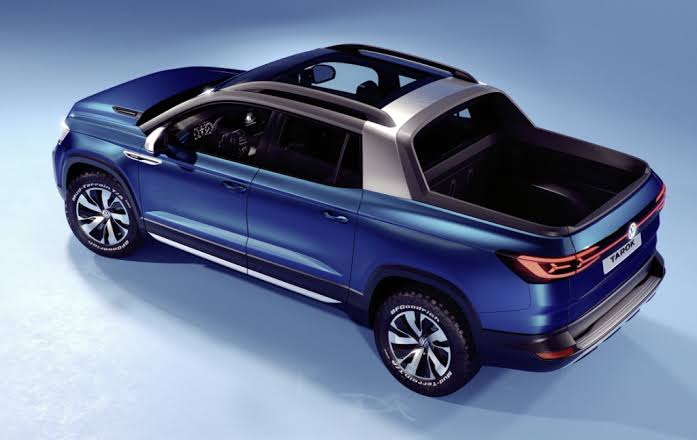 Photo: VW
When it became clear that Volkswagen was going to sell a truck in the United States, the obvious assumption was that they’d use the Scout factory they’re planning to build. But Ford may be part of the conversation too.
A partnership with Ford would be the fastest and most direct way to jumpstart the effort. The US automaker already builds the VW Amarok, a midsize pickup based on its Ranger model, in South Africa. But Ford executives are reluctant to extend the collaboration to the US and risk cannibalizing its light-truck franchise, the people said.
Should Ford reject an industrial tie-up, Blume’s executive team in Wolfsburg reckons Volkswagen can bring a Bronco rival to market within two to three years, drawing on suppliers and the off-road expertise at its Scout unit, according to some of the people.
Scout’s South Carolina factory, currently slated to start deliveries in 2028, could provide extra capacity, the people said. Audi, meanwhile, has no US plant and an entire American lineup exposed to tariffs. It is studying local production of larger SUVs that could tap spare capacity within the group, the people added.
Whether VW can genuinely rival Ford’s Bronco remains to be seen, but the attempt alone should be interesting to watch.
VW Shows Off an Autonomous ID.Buzz
Volkswagen has found a new use case for its ID.Buzz: driverless commercial mobility. The vehicle displayed at NVIDIA GTC Berlin is a long-wheelbase autonomous ID.Buzz with a mobility-as-a-service interior. Its NVIDIA DRIVE AGX Hyperion 10 reference configuration comprises 14 cameras and nine radars, representing VW’s most public step yet toward deploying the van as a robotaxi-style platform for commercial clients.