We’ve all heard about the Strait of Hormuz, currently closed to most ship traffic as a result of a now six-month-long war of choice that seems to have no real strategy attached.
But that’s just one of many oil conflicts that are currently affecting oil availability — and electric cars have nothing to do with any of them.
Ever since oil became such an important transportation fuel, it has fueled global conflict. Many wars of the 20th and 21st century have been centered around oil.
Not only that, but oil is also quite harmful to health. Burning it causes harmful air pollution and climate change.
The danger of oil as a resource has only become more apparent over time, as the world discovers new harms of pollution, climate change, and continued oil conflict.
Right now, that last point is being made abundantly clear, with the world experiencing no fewer than six conflicts directly tied to oil availability, and a few more waiting in the wings.
You’ve All Heard of the Strait of Hormuz by Now
The first is of course the conflict around the Strait of Hormuz, through which about a fifth of the world’s oil used to pass.
The Strait has been generally closed since March, after the US and Israel started an unprovoked war against Iran, with their first attack killing its Supreme Leader, Ali Khamenei. Since then, despite several threats from the former reality TV host posing as head of government in the US, Iran has declared the narrow Strait along its coast closed to ship traffic.
While some ships have been able to pass through at various times over the last six months, total traffic through the Strait has slowed significantly.
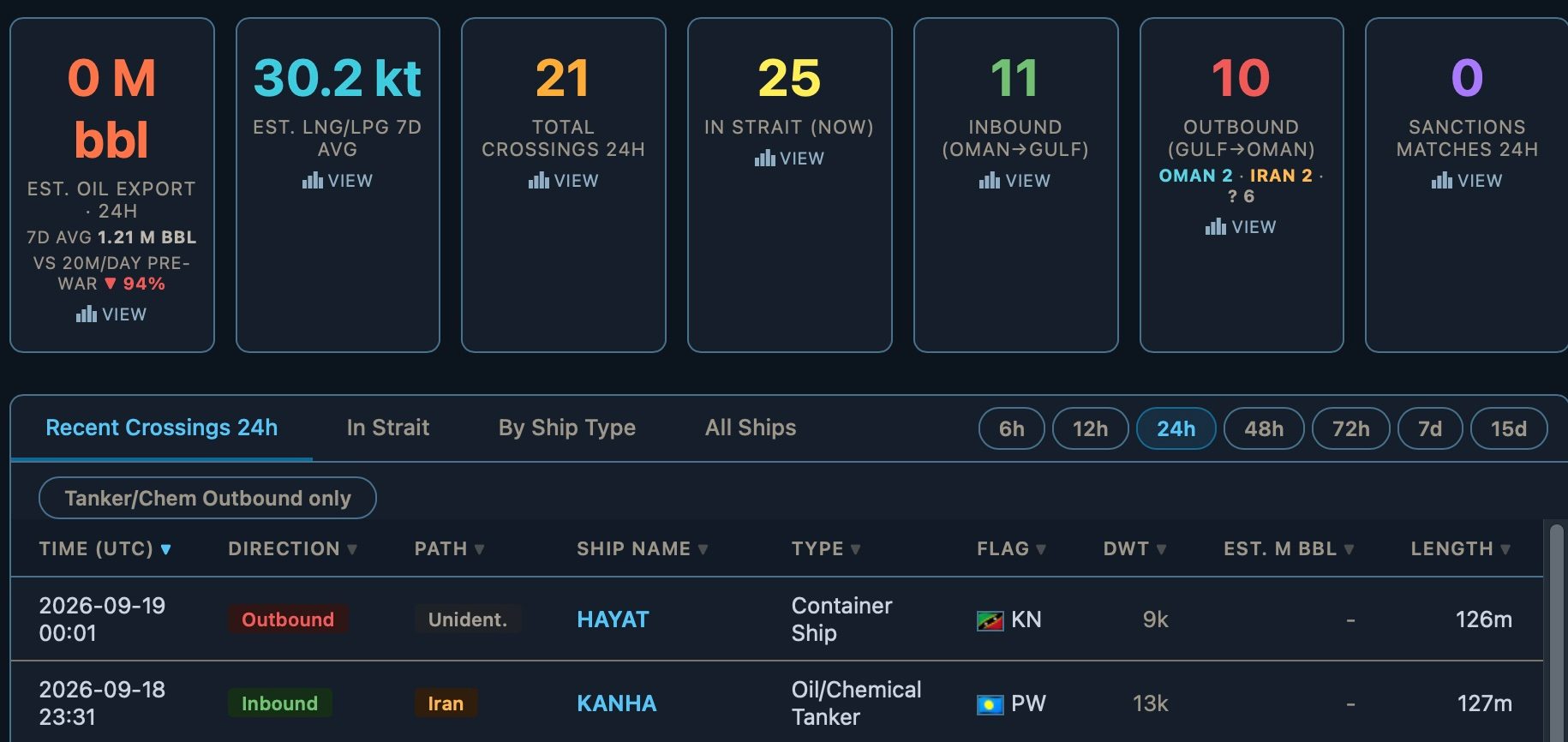
The Strait of Hormuz ship tracker shows a live view of how few ships are passing through the strait.
When the conflict started, everyone was worried about an imminent global oil price shock. Prices did rise, but not as much as many had initially anticipated, even though diesel prices have recently hit an all-time high in the US and show no sign of recovering.
The primary reason for the relatively smaller-than-expected price shock was due to China cutting its oil use, largely due to the country’s rapid embrace of electrified transportation. Other countries have seen EV sales skyrocket since the start of the conflict, but China’s EVs have offset more oil use than any other country.
China should have been one of the most vulnerable countries to Hormuz closure, given that most of the oil going through the Strait makes its way to East Asia, where China is the largest consumer. But the country cut its oil imports and its oil use drastically, which led some to credit it for “saving the world” from a potentially worse oil shock.
That’s Not the Only Mideast Strait Affecting Oil Markets
The Hormuz conflict has forced everyone to rapidly try to find any other method to transport oil, as the world is dependent on its free flow. One method has been to utilize a key pipeline that crosses Saudi Arabia from East to West, relieving the pressure built up by the closed Strait of Hormuz — the pipeline was first built in the 1980s to relieve pressure during a previous Hormuz conflict.
However, that became a significantly less viable option when a pumping station along the pipeline was blown up in a drone attack just last week, causing the Saudis to shut off the pipeline as a precaution.
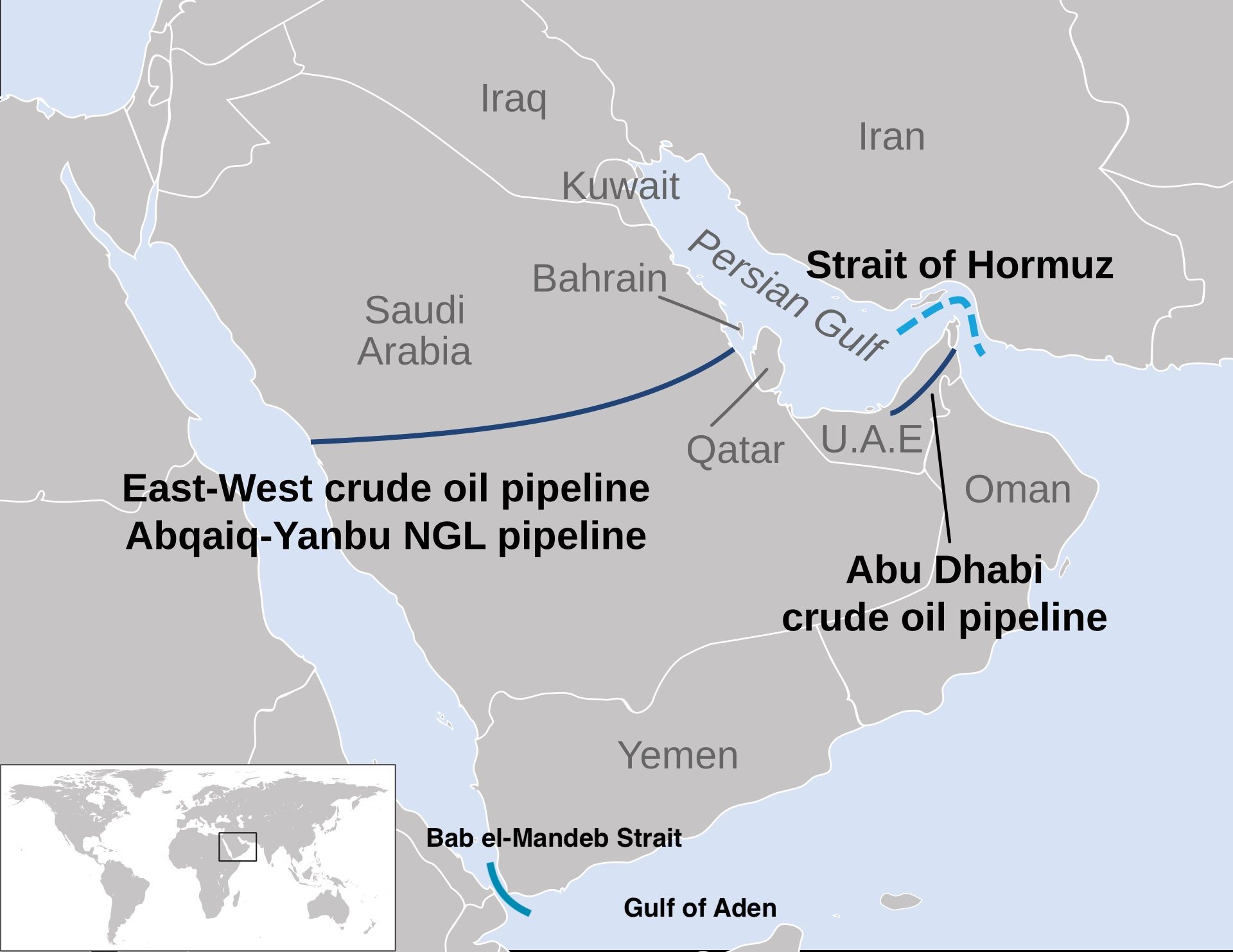
The attack was launched by the Houthis, a rebel group in Yemen (currently at civil war since 2014) which is backed by Iran and opposes the US, Israel, and Saudi Arabia.
The Houthis’ territory is in Southwest Yemen — which happens to border another narrow oil chokepoint, the Bab-El-Mandeb strait between the Red Sea and the Gulf of Aden, through which about 9% of global seaborne oil shipments travel.
The Houthis don’t have as much control over this strait as Iran has over Hormuz, but have threatened and carried out attacks on ships transiting it. This has led other nations to form a defense pact to protect ships in the Gulf of Aden, though given that there is already trouble on the other side of the Arabian Peninsula, attention will have to be split between the two.
The Houthis don’t have much ability to project power beyond their territory, but with help from Iran they have attacked several other parts of Saudi Arabia in recent weeks, including sending missiles at the Saudi capital as this article was being written. Given Saudi Arabia’s importance to international oil markets, their vulnerability to Houthi attacks threatens further disruption.
Ukraine Blows Up Oil Refineries After Russian Invasion
Not too far north of all of this is another conflict increasingly focused on oil. In 2014, Russia invaded Ukraine and occupied the Crimean Peninsula, which borders the Strait of Kerch — another chokepoint for oil shipments that connects the Sea of Azov to the Black Sea, which in turn connects to the Mediterranean and the Atlantic.
Until Russia occupied Crimea, it controlled one side of the Strait of Kerch, but now it controls both. This secures another method for oil to leave Russia and enter the world economy, which is a major source of income for the country.
Or at least, it was a major source of income. As Russia’s war with Ukraine has intensified — with its invasion of Eastern Ukraine in 2022 — other countries have put significant sanctions on Russia, limiting its ease of exporting oil.
That 2022 invasion was only possible after the international community basically ignored Russia’s aggression in Crimea, as a stronger reaction might have jeopardized Europe’s supply of Russian gas, which it relies on for heating despite the availability of cleaner alternatives.
But more importantly, Ukraine has recently found a highly effective new tactic: blowing up Russian oil refineries. Reportedly the country’s refining capacity is now only 70% of its domestic usage, with 24 out of the 33 biggest refineries in Russia having been struck.
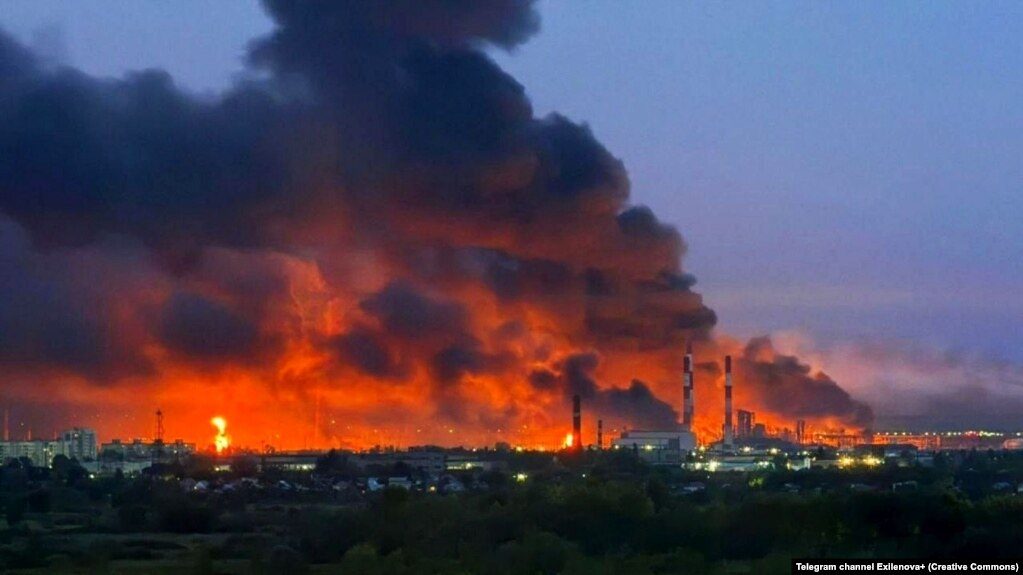
This has led to long lines at Russian gas stations — a direct consequence of a war that Russia started, and one more reminder that global dependence on oil leaves every nation exposed to the instability that comes with it.