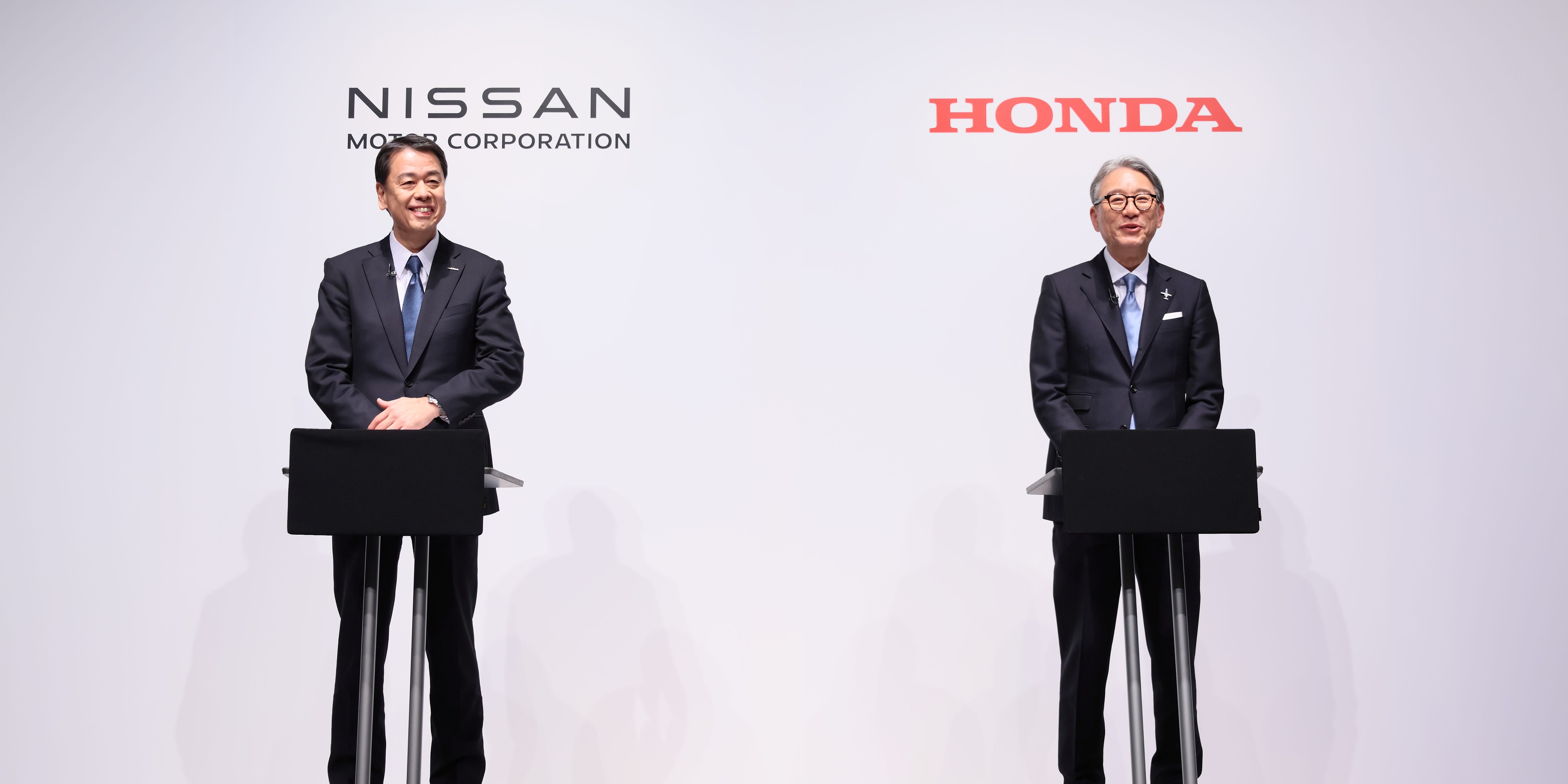
The lengthy, dramatic Honda-Nissan saga is finally reaching a more defined phase, as the two companies announced on Monday that they have officially entered into a joint development agreement. On the surface, the details of this agreement sound a touch boring and broad, but reading between the lines suggests this may be more important than it initially comes across.
According to the brands, Honda and Nissan will “standardize multiple electronic control units (ECUs) that form the core of next-generation software-defined vehicles (SDVs), along with the in-vehicle operating system and key parts of the middleware, and vehicle control software that run on these ECUs.”

Acura Nexera Vision — John Pearley Huffman
Let’s translate that word salad. Software can make or break a car these days; the ECUs that Honda and Nissan are developing together are being designed to serve as “core ECUs within the E/E architecture of next-generation SDVs.” The “E/E” architecture of a vehicle consists of the electrical/electronic architecture, which touches practically every aspect of how a car works.
It might not be obvious at first read, but this collaboration will have an effect on factors from the background (like a car’s wiring system) to things that are very much front and center, like how software affects the car’s driving characteristics. From powertrain control to EV battery control, the scope of this agreement could have a real impact on how Nissans and Hondas behave in the future.

Nissan Hyper Force concept interior — Nissan Design
Another important collaboration pointed out in the official announcement is joint work on the in-vehicle operating system. The infotainment systems in both Honda and Nissan products today don’t exactly push the envelope beyond what other companies currently offer, which makes this an important area for the partnership to succeed in. It’s not totally clear if this will result in shared software running on both Honda and Nissan infotainment screens, but the potential is there.
The first vehicles to benefit from this collaboration are scheduled to arrive in fiscal year 2029, specifically in both companies’ “next-generation SDVs.” Neither Honda nor Nissan have announced specific models that will feature the new software.
There might be a few years of waiting for the first vehicles to arrive, but Honda and Nissan believe this agreement will ultimately allow the two companies to shorten development cycles and reduce development costs while increasing economies of scale. It’s no merger, but it’s a meaningful step in the same direction those failed talks once tried to take the two companies.