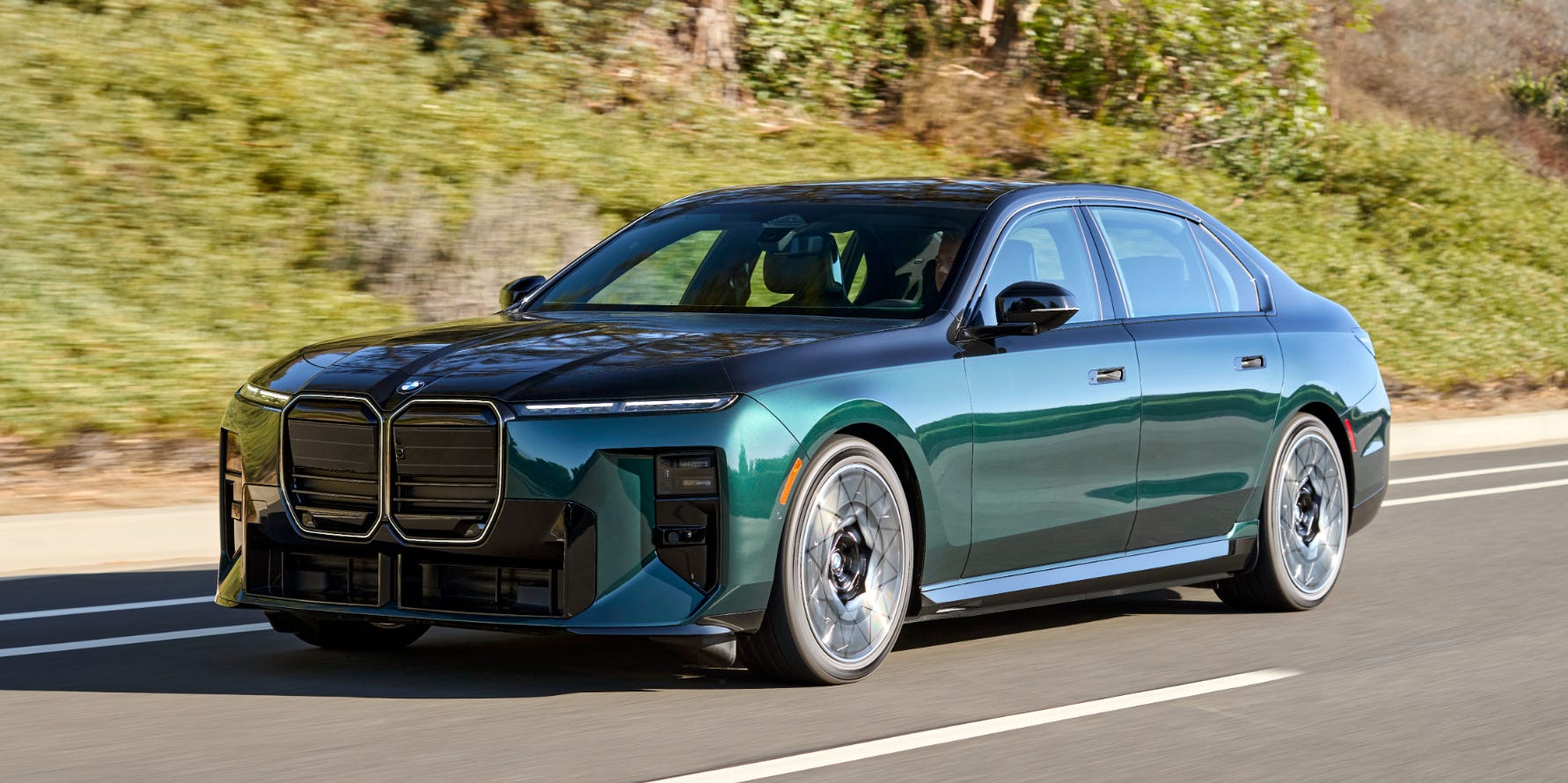
Taking a classic nameplate and turning it electric is a gamble for most automakers. For BMW, offering identical versions of the same model with gas-powered and all-electric powertrains has become a familiar formula. First launched in 2023, the BMW i7 has already earned plenty of love because of its smooth and silent demeanor. Can an all-new interior design philosophy cement its legacy?
The Lowdown

The BMW i7’s core blueprint is unchanged for 2027, but the new front end is obvious at first glance. More handsome horizontal grille slats connect a still-oversized kidney grille, while extended LED taillights connect the rear end. Inside, the BMW i7 features an updated operating system, a sleek panoramic display, and a dose of Neue Klasse styling.
- Vehicle tested: 2027 BMW i7 60 xDrive
- Base Price: $127,300
- Price as tested: $154,900
- Location: Orange County, California
How Does It Drive?

The mission of an extended-wheelbase executive sedan is poise, and the BMW i7 succeeds at delivering a soothing experience. Yet, powered by a 112.5-kWh battery pack, the i7 60 xDrive is also plenty fast. With 536 horsepower and 549 lb-ft of torque on tap, the i7 60 xDrive offered a surprising punch of performance.
Acceleration was swift—my experience matching BMW’s claim of a 4.6-second 0 to 60 mph—yet also dignified. Using a rear-biased, dual-electric-motor setup, the i7 doled out power in a more linear fashion than most electric vehicles. Peak torque arrived instantly and offered a genuine punch off the line, but I appreciated the more subtle wave of urge available at half-throttle and higher speeds. It felt quick enough to escape an entourage of paparazzi, but not so fast that an executive would be jostled in the rear seat by acceleration. A piped-in, synthesized sound that accompanied hard acceleration was the only sonic nod to speed.

At 6000 pounds, the BMW i7 is heavy. Even with BMW’s full suite of adaptive chassis control systems, including full air suspension and active roll stabilization, the i7 displayed its weight while winding through Orange County’s Ortega Highway. Akin to my experience in BMW’s new iX5, the electric sedan behaved appropriately but was clearly making full use of its electronic dynamic aids. Turn-in was quick enough and the steering weighted up nicely, but I could feel the active roll stabilization fighting to keep the front end pointed the right way. Similarly, midcorner bumps tended to unsettle the rear end into a quickly corrected side step. Steering feel was nowhere to be found either. But in a modern BMW, that’s no surprise, sadly.
Open highway miles were the i7’s comfort zone during my drive. The same heft that made the i7 uncertain in the canyons aided a silken ride, even on California’s disjointed highways. Like the 740, the i7 can decouple its roll bars to reduce unwanted in-cabin movement at higher speeds, and the suspension trick worked well in practice. The i7 felt soft yet secure even at a rapid cruise. Similarly, the 126.6-inch-wheelbase sedan belied its size around town, maneuvering confidently into tight parking spots and narrow urban alleys thanks to standard rear-wheel steering.

In the end, the i7 60 xDrive is happiest eating up highway miles in comfort and quiet, even if its weight and muted steering keep it from feeling like a canyon carver.