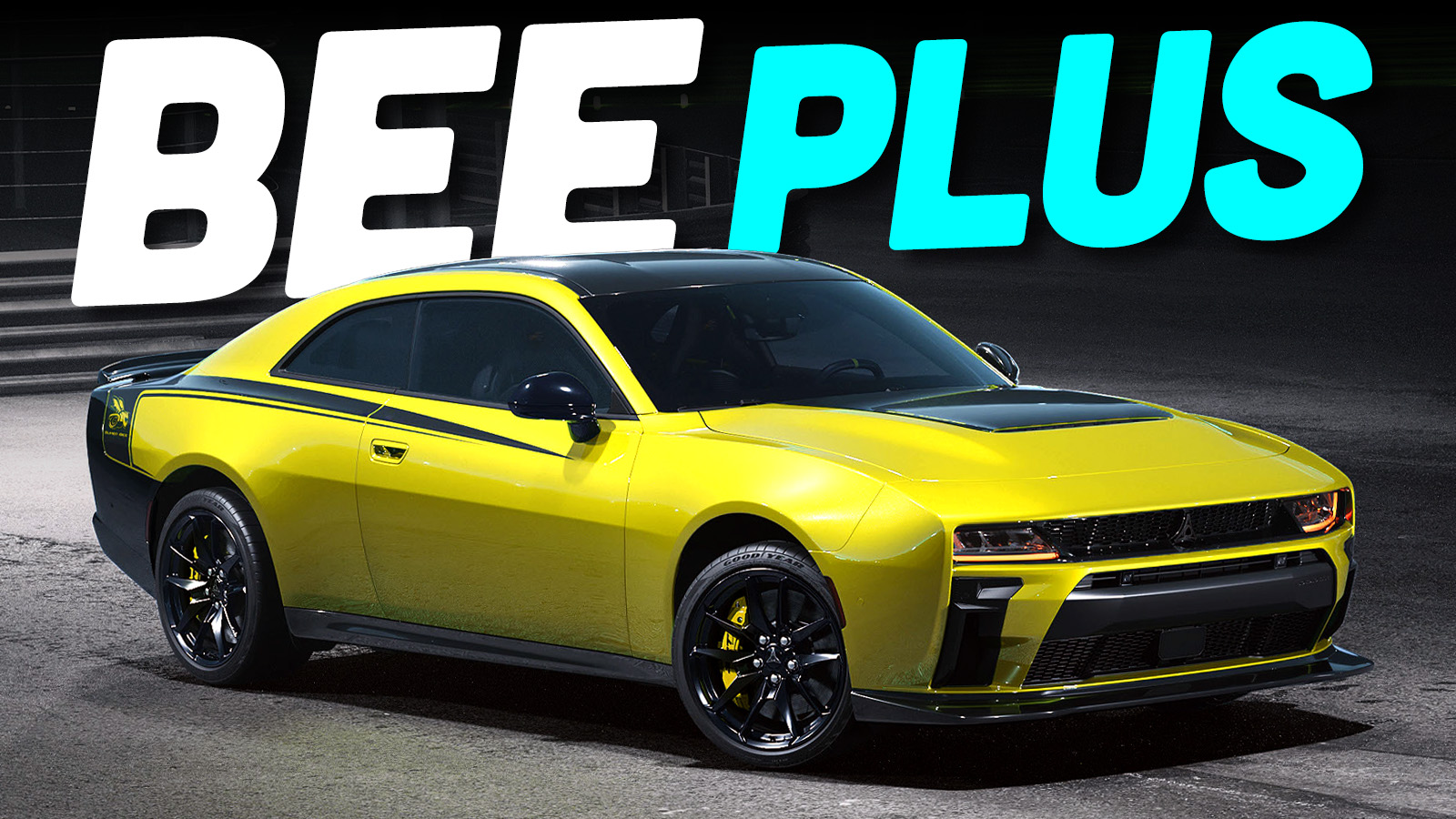
The LB-chassis Dodge Charger might have the weirdest launch arc of any car in recent memory. First unveiled as a widely panned EV, slow sales of the electric model led to huge discounts. Cleetus McFarland recently bought a brand new one for 50% off. Yeah, 50% off. Roughly a year after the EV’s launch, combustion-powered models joined the party, and they’re strange in their own right. No more V8s, no more Pentastars, only a pair of twin-turbocharged straight-sixes. On the outside, the Charger seems like an obvious victim of the Carlos Tavares era of Dodge parent company Stellantis — a plan that didn’t seem right from the start, hampered by decisions that didn’t seem to focus on the wants of Americans. Well, America seemingly has free rein again, and Dodge is celebrating by reviving a time-honored name: Super Bee.
Engine and Performance
To create the Charger Super Bee Launch Edition, Dodge started by taking the three-liter Hurricane straight-six and bolting on larger turbochargers. The compressor wheels in these new Garrett units measure 56 mm, up from 54 mm in the Scat Pack’s turbos. Fed by thermal-wrapped intakes and modified intercoolers and serving up more than 30 PSI of boost, these turbos help push output to 600 horsepower. Peak torque stays at the same 531 lb-ft found in a Charger Six Pack Scat Pack, but a 50-horsepower boost isn’t nothing. Dodge claims it shaves three-tenths of a second off the Scat Pack’s zero-to-60 mph time, with the Super Bee boasting a 3.6-second figure. That’s slightly quicker than Dodge’s claimed time for a 2015 Charger SRT Hellcat, although the Hellcat’s purported 11-second quarter-mile time should help it pull ahead of the 11.8-second Super Bee at the top end, provided the older Dodge can actually find traction.
In the real world, the Charger Super Bee might actually have an edge due to the repeatability of all-wheel-drive launches. Dodge has specced beefier half-shafts to better handle abuse, and drivers can still flip this large car into rear-wheel-drive mode to clean the marbles off the rear tires. Smoky burnouts come easily in a car this heavy — while Dodge hasn’t released a curb weight for the Charger Super Bee, the Six Pack Scat Pack two-door weighs 4,816 pounds.
Chassis and Brakes
New continuous adaptive dampers team up with stiffer bushings and spring rates, with a 20 percent stiffer rear anti-roll bar also working to improve body control. For grip, 11-inch-wide 20-inch wheels come wrapped in 305-section Goodyear Eagle F1 Supercar 3 rubber — a full foot of 220-treadwear tread section at each corner. Six-piston front calipers and 16-inch discs at all four corners round out a package that clearly works hard to overcome the mass of its platform.
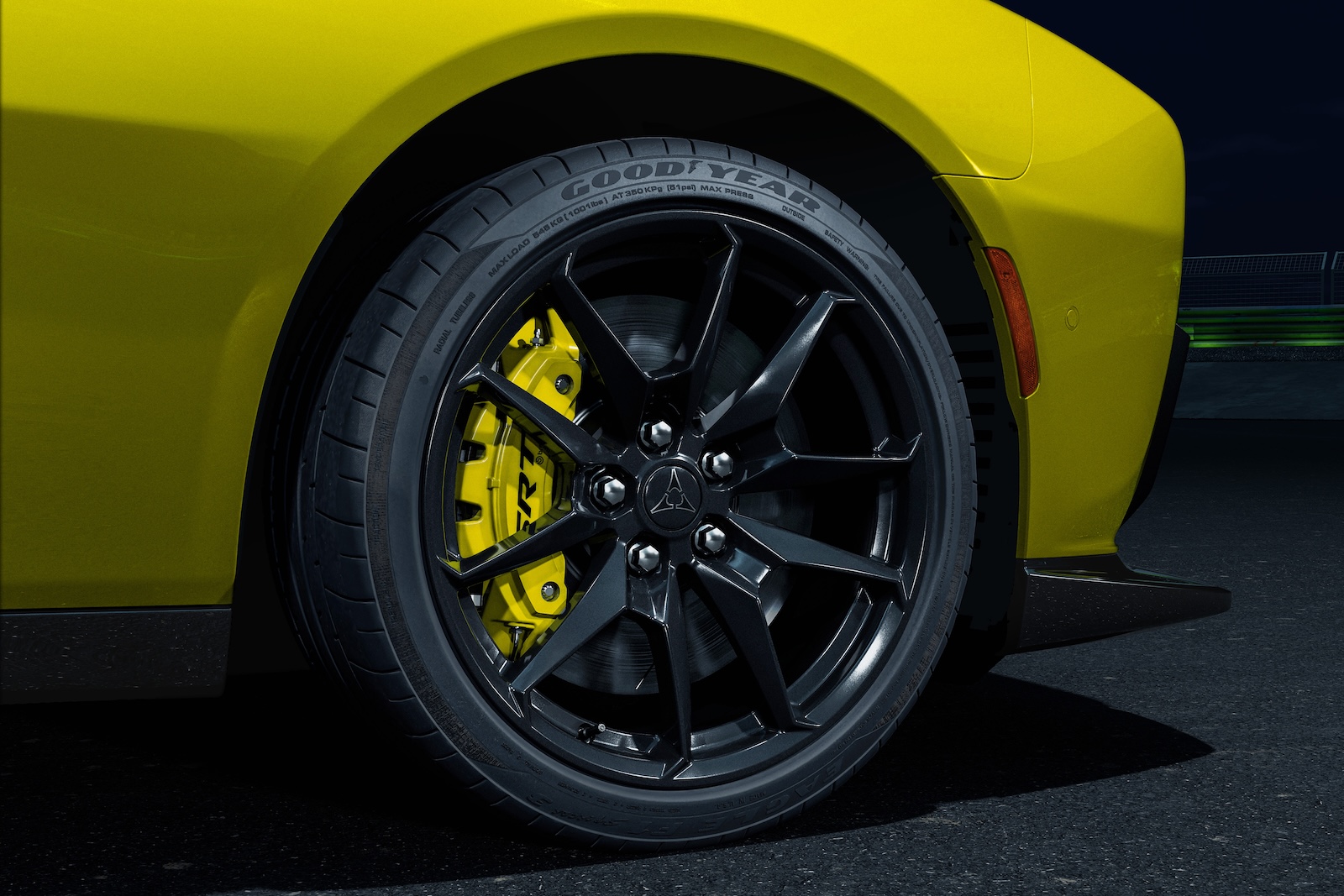 Photo credit: Dodge
Styling
The Charger Super Bee gets a dramatically revised front end that looks more aggressive than the clip on slower models. The light bar has been ditched for an all-mesh upper grille, the main grille is now single-frame, and there are chunky corner vents that serve as functional cooling pieces. A prominent front lip caps it off, though it’s easy to miss given the Super Bee Launch Edition’s signature hue — a snot-rocket yellow-green Dodge calls Sucker Punch, which is exactly what it does to your eyeballs.
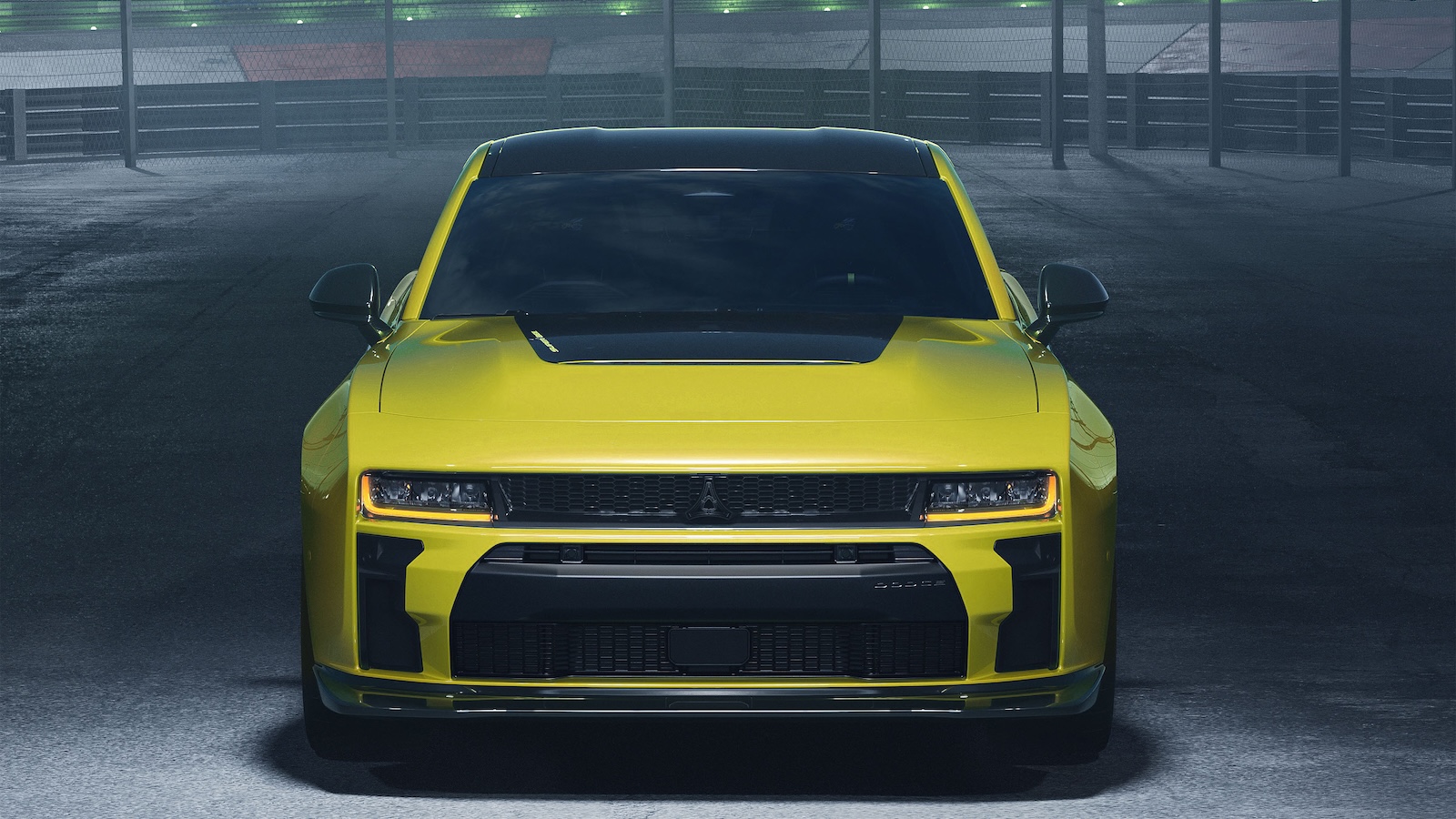 Photo credit: Dodge
That bold paint comes attached to a polarizing livery. While the stinger stripe down the flank makes sense, a completely contrasting rear bumper looks decidedly strange. Dodge also showed off a four-door Charger Super Bee with the inverse color combination, though it’s debatable whether that arrangement fares any better.
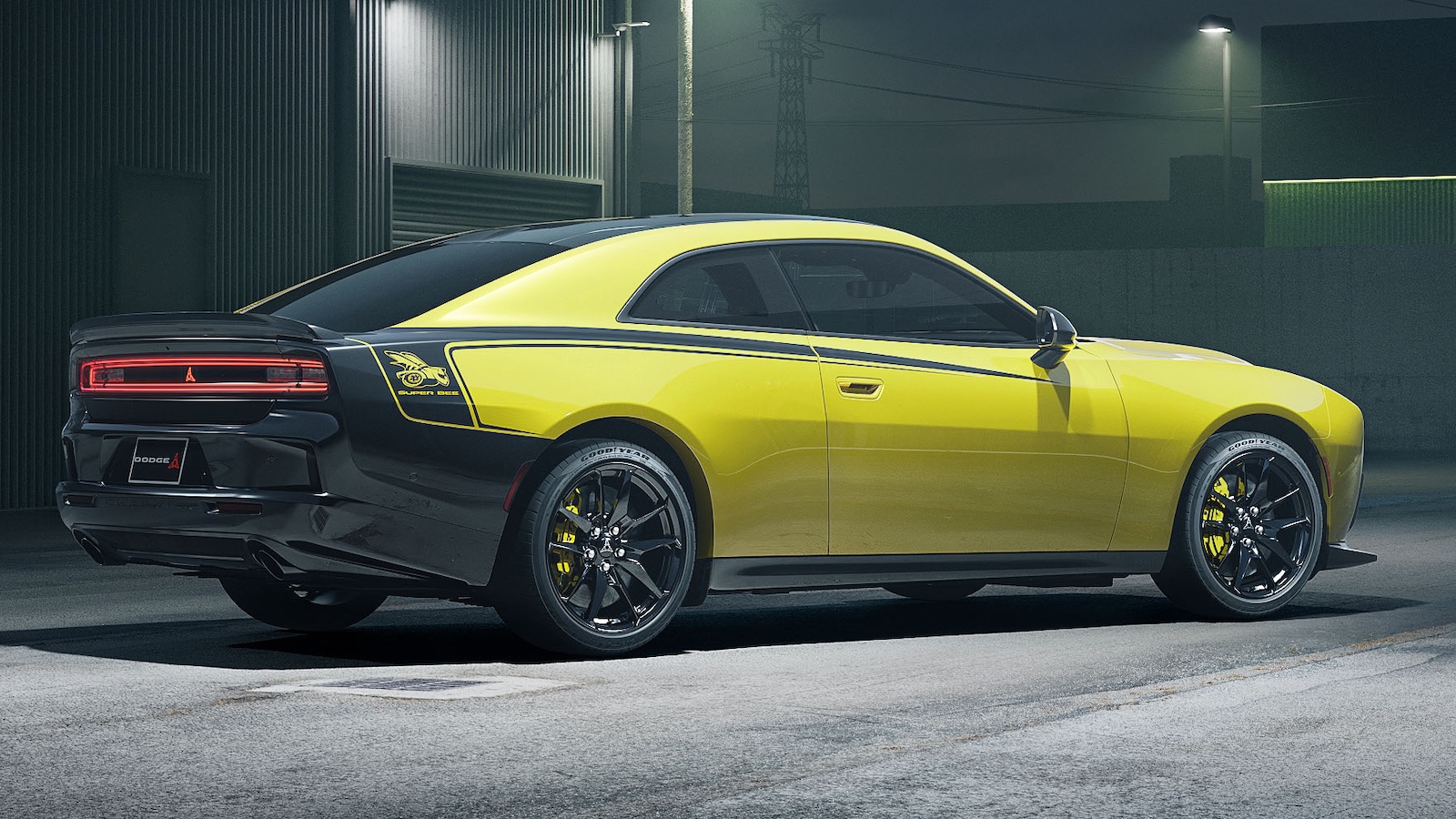 Photo credit: Dodge
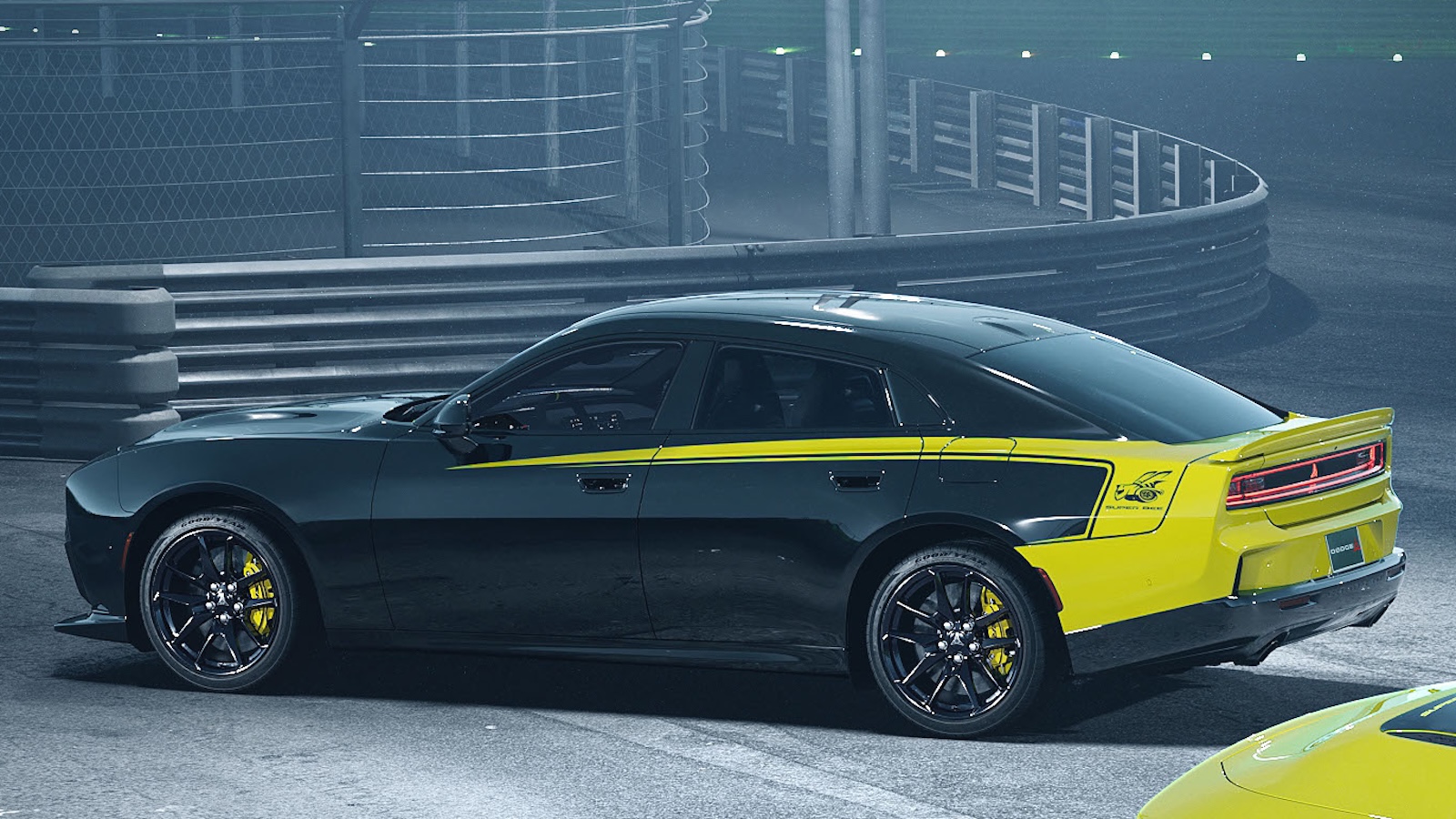 Photo credit: Dodge
What Dodge Isn’t Saying
Part of this reveal feels anticlimactic, but what Dodge isn’t telling everyone is just as important as what it is. The Charger Super Bee Launch Edition isn’t an SRT model — it doesn’t carry those three letters that signify the most powerful vehicles Mopar offers. The only SRT badging on the car appears on the six-piston calipers, and that feels like a massive clue. Earlier this year, Stellantis announced plans for a Dodge Charger SRT by 2030, suggesting something even faster could be in the pipeline. For now, the Super Bee Launch Edition sits at the top of the Charger lineup, though pricing, availability, and an official on-sale date won’t be confirmed until later this year.