Logan K. Carter/ Jalopnik
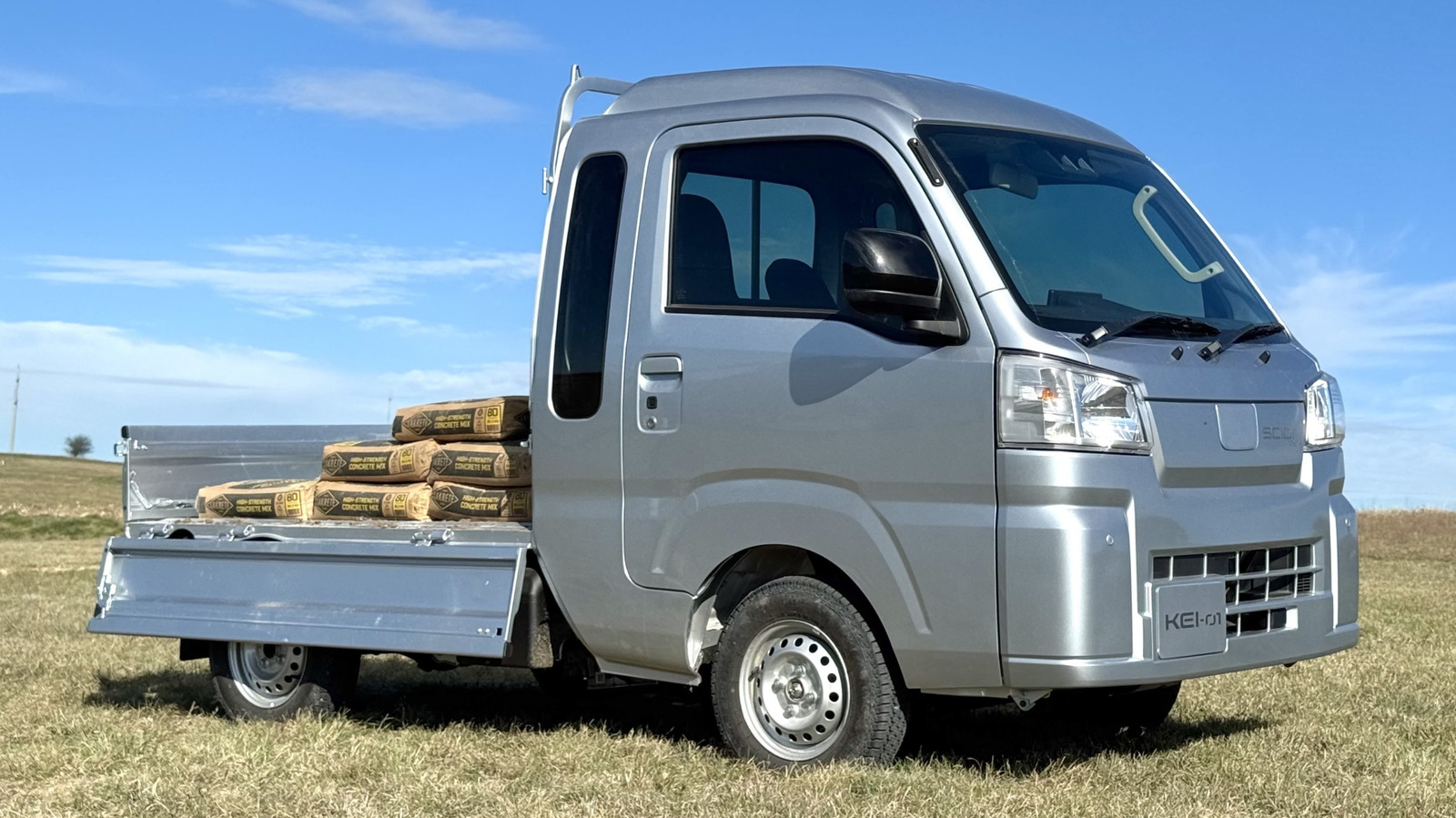
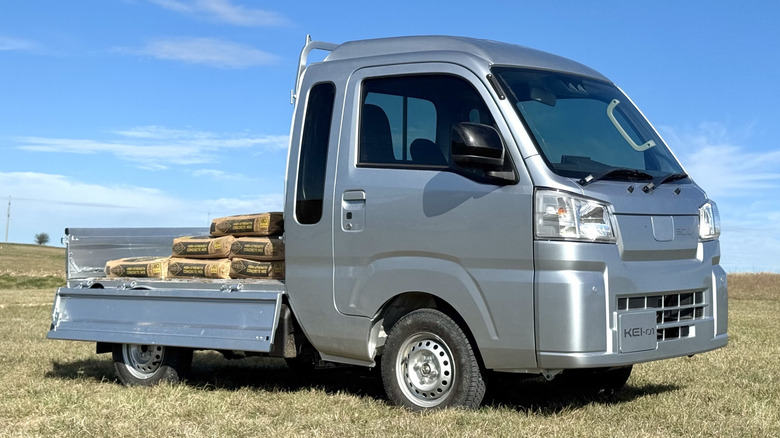
I was just as shocked as you all were last week when Toyota announced the launch of the Scion by Toyota brand in the United States with a right-hand-drive kei truck. The KEI-01 is limited to 25 mph in order to conform to low-speed vehicle (LSV) regulations, and as of now it’s exclusively limited to fleet buyers. Though final details about the dinky little hauler remain slim, I did get a briefer-than-brief chance to whip around a prototype KEI-01 while attending the press event in Texas at which the truck was revealed, and the experience left me exceedingly tickled and slightly baffled.
I was baffled by Toyota’s choice to bring such a niche product in the United States, its choice to do so under the name “Scion by Toyota,” and by its choice to make it available to fleets only. I was tickled by the opportunity to contort my comically long limbs in order to squeeze my 6-foot-8-inch tall body behind its wheel and take it for a spin. The result? A truly unique automotive experience that is all but guaranteed to make you giggle.
Full disclosure: Toyota wanted me to sample a smattering of its new and updated models, so it flew me out to scenic Frisco, Texas, and kept me fed and housed in a hotel for a few days. I got to witness the announcement of the Scion by Toyota brand there, and drive the KEI-01 a few hundred feet.
It’s a weird blend of modern and retro
Logan K. Carter/ Jalopnik
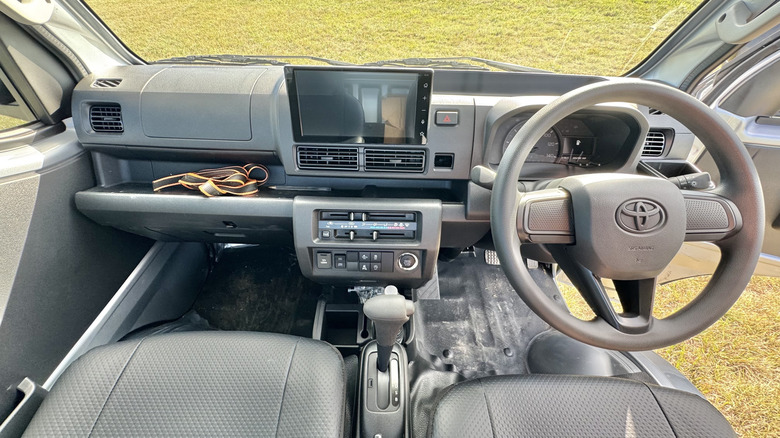
The KEI-01 is not a brand new vehicle — in fact, it’s based on the Toyota Pixis Truck, which is a rebadged 10th-generation Daihatsu HiJet Truck that itself was introduced 12 years ago now. We are only getting the “extended cab” version of the kei truck, generously called the Jumbo on the Daihatsu HiJet, which adds a taller roof and about an iPhone’s length of room behind the two seats for storage — I used that space to store my shoes, since I couldn’t fit behind the wheel while wearing them.
In its U.S. specification, the dinky KEI-01 will only be offered with a mid-mounted 660cc three-cylinder engine that sends its power to all four wheels via a CVT automatic transmission. Toyota didn’t make power figures public, but it’s almost certainly the same 660cc three-cylinder used in the other kei trucks that share the platform, which produces about 50 horsepower and 47 lb-ft of torque. The standard four-wheel-drive system features a lock mode that should make this little pickup rather capable on unpaved roads, but that’s only if your spine is up to the task.
Logan K. Carter/ Jalopnik
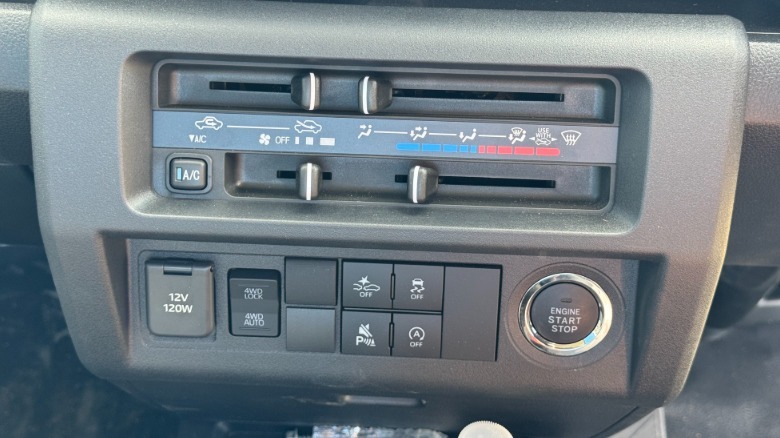
They will all come standard with a weird mix of modern and throwback features, like dual front airbags, automatic emergency braking, push-button start, traction control, parking sensors, and an engine start/stop system. The standard climate controls are operated using horizontal levers like the ones in my grandfather’s 1991 F-150, and the overall appearance of the interior looks like it belongs in a car that’s being shown at Radwood, minus the big tacked-on infotainment screen. I didn’t get to experience any of these technology features on my abridged drive, except the start/stop system that I instantly turned off because it cut the AC and was unsurprisingly annoying.
Refined is not the word to describe the KEI-01’s driving experience
This was my first time driving a kei car, and I solely got to drive the KEI-01 on a short gravel loop, but the instant I started moving I was aware that it was not a refined vehicle. The suspension that gives it a 600-pound payload capacity also felt like it faultlessly transmitted even the smallest surface detail of every single piece of gravel I drove over directly to my butt. It jiggled parts of me that I didn’t know could jiggle, and sounded very crashy going through dips and bumps. I wouldn’t want to ride in one if I had a bad back. Though Toyota didn’t release a spec sheet for the KEI-01, the Daihatsu Hijet has a truly puny wheelbase of 74.8 inches and laughably small tires, so no one should expect it to ride like a limousine.
As for its powertrain, the three-cylinder engine and CVT combination were more than enough to get the KEI-01 to its top speed of 25 mph, but the truck I drove did not have the limiter yet, so I saw as high as 40 mph. The CVT created a typical momentary lag between throttle pedal inputs and actual engine response, but discussing powertrain responsiveness in a kei truck that’ll be limited to 25 mph is about as useful as discussing a new hyperpop album with an octogenarian.
Tall folk will fit!
Logan K. Carter/ Jalopnik
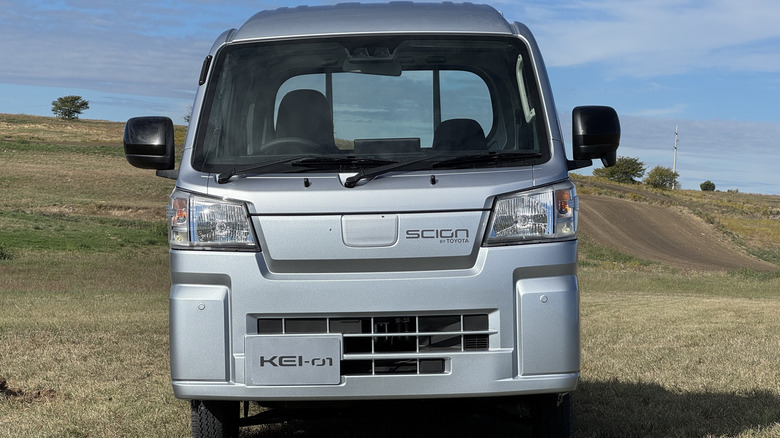
If you didn’t catch it upon first mention, I’m 6-foot-8, so I drew a bit of a crowd when I first tried inserting myself into the KEI-01. I’m all legs with a 40-inch inseam, and my first entry attempt was foiled by the immovable steering wheel. Once I took my shoes off and swung my legs in at an angle, I was able to fold myself into the seat, and the taller roof of the extended cab left me with enough headroom to sit upright.
Even so, the KEI-01 remains a puzzling product. It is slow, bumpy, and available only to fleets, yet it is also charming in a way few vehicles sold in the U.S. manage to be. Whether Scion by Toyota can find a place for it remains to be seen, but my few hundred feet behind the wheel left me smiling, and a little sore.