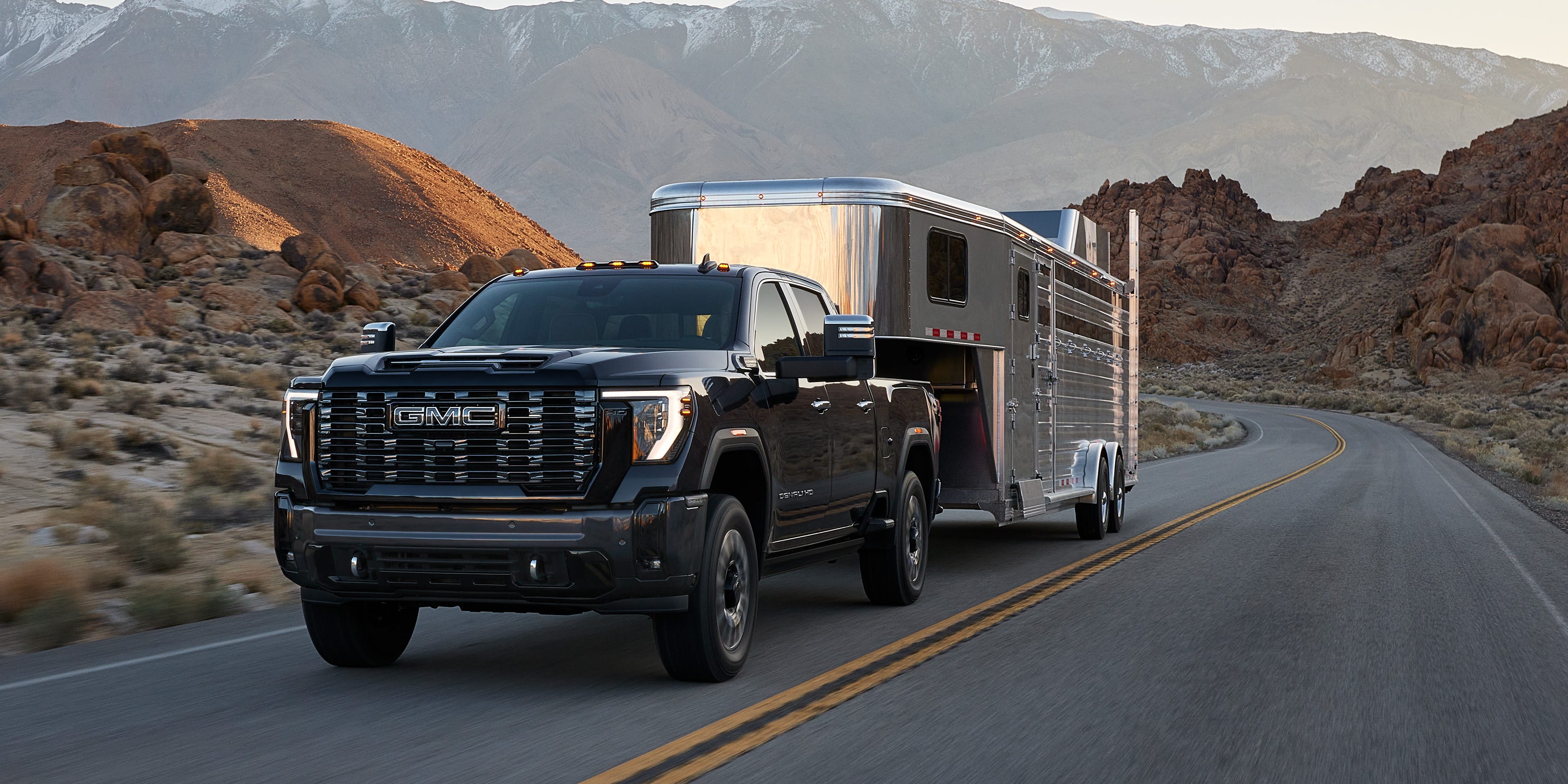
Those who resided in New York City or any of the nation’s population-dense metropolitan environments around the turn of the millennium probably remember the transformation: Seemingly overnight, the time-tested four-door sedan limousine disappeared from the urban landscape, replaced by full-size SUVs as the luxury transport vehicle of choice for upscale car services. With their spacious interiors, their sturdy truck-based chassis (better suited for navigating aging infrastructure), and automakers’ collective decision to cull the herd of suitable sedans, it seemed the natural selection of evolution was at work.
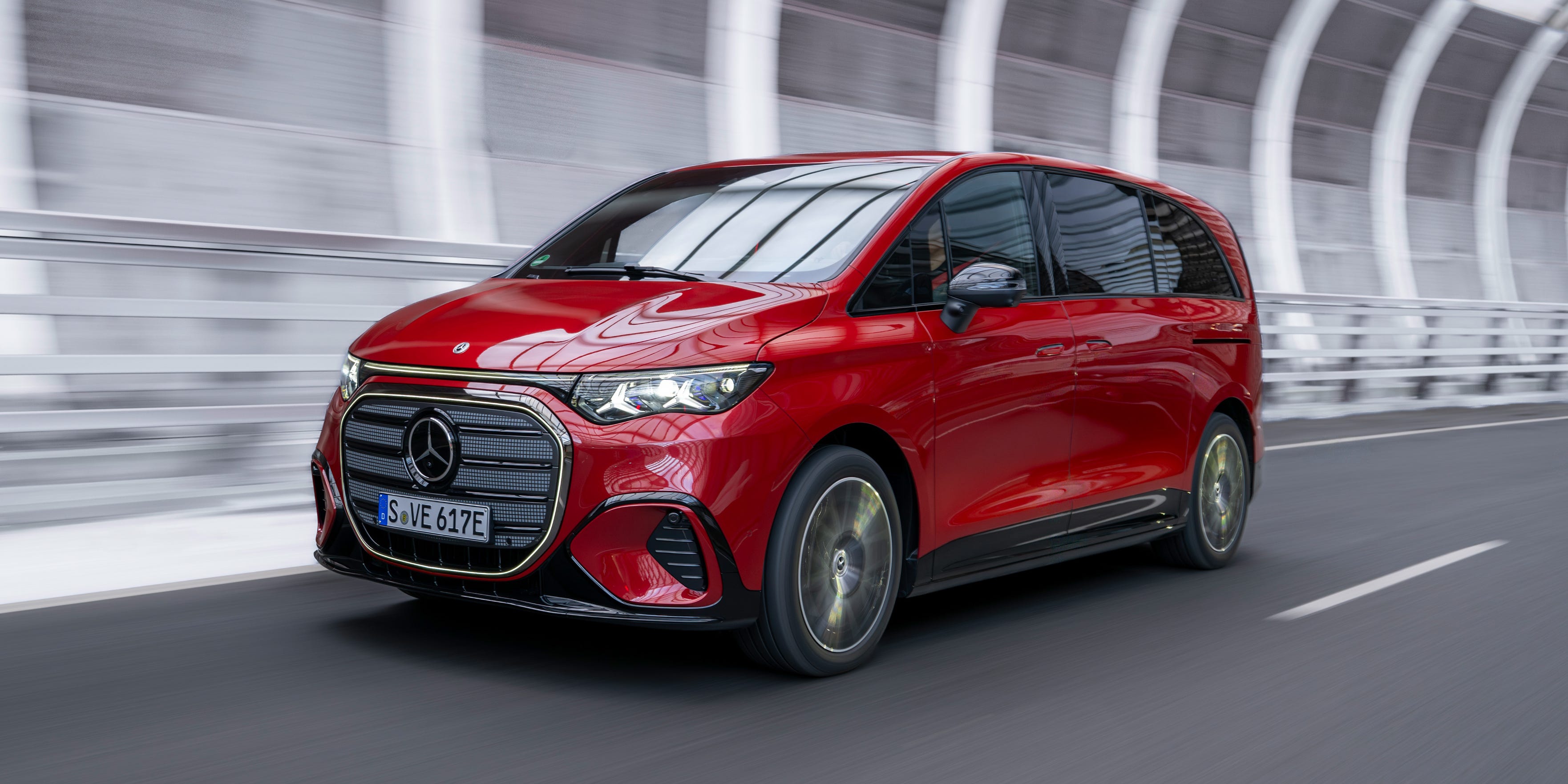
Now, two and a half decades into the 21st century, Mercedes-Benz is attempting to kick-start a similar regime change with its new VLE-class van, an electric vehicle aimed straight at the heart of the VIP car-service industry.
Mercedes is convinced that the VLE-class passenger vehicle — staffers repeatedly insisted that it’s not a “van,” mini or otherwise — is a cut above any current minivans that lean into the luxury segment. So much so that Mercedes executives use the phrase “Grand Limousine” for the luxury-focused versions of the VLE. One executive told us the brand’s U.S. dealer network thinks “minivan” is a bad word.
A Low-Flying Private Jet on Wheels with a World-Class Cinema
Though luxury versions of the full-size Sprinter van and smaller Metris (aka V-class in the rest of the world) have long existed, they are commercial vehicles sent to finishing school to renounce their blue-collar roots and gain an appreciation for the finer things in life, such as sound deadening, multiple touchscreens, and kingly seats worthy of coddling royal bums — or at least maybe the Kardashians’. The VLE, on the other hand, is new from the ground up, a design dedicated to passenger comfort first and very little manual labor if it can help it.
You can fit up to eight passengers with rear bench seats, but it’s the two/two/two configuration that really channels the private-jet-on-wheels vibe. There’s not a bad seat in the house, but we did notice that the driver’s seat in the more upscale Exclusive trim we tried has less fore-and-aft travel and backrest adjustment than the seats in the less swanky versions. Mercedes says it has to do with the hardware for the fancy electrically adjustable sliding rear seats (MB calls it a “seat ballet”), but it also, maybe not so inadvertently, reserves more room for the pampered passengers paying the fare.
Like a minivan, the VLE has dual power-sliding side doors with roll-down windows. Interior B-pillar-mounted switches allow you to operate either side with the flip of a tiny selector switch. Additionally, they can be operated by the driver or via remote access with an app. Tight curbside entry and exit in urban environments has never been so easy.
We’d be remiss if we didn’t point out the VLE’s party trick: the 31.3-inch panoramic screen tucked up in the ceiling. Dubbed the MBUX Rear Space Experience, the screen teams with the available Burmester audio system with Dolby Atmos sound processing to create a mini theater experience sure to entertain even the most miserable cinema Pecksniff. The startup sequence, summoned by either of the wireless remotes, can even be programmed to raise the window sunshades as the screen deploys, for maximum dramatic effect. And in a nod to the proletariat, the screen is available even on the base model.
Front- or All-Wheel Drive, Both Capable of Turning Around in Tight Spots
Without motors, the VLE is just a fancy shed with a home theater installed. Luckily, it offers a choice of two powertrains: the VLE300, which has a single 272-hp motor driving the front wheels, and the VLE400, with a dual-motor setup providing all-wheel drive and 413 horsepower. The vehicle features an 800-volt architecture, has a nickel-manganese-cobalt battery with 115 kWh of usable capacity, and can add a claimed 220 miles in just 15 minutes when connected to the appropriate 300-kW DC fast-charger.

For our first stint at the wheel, we grabbed a Europe-market VLE400 in Obsidian Black with AMG Line Plus trim. With a combined 413 horsepower from its dual motors and rolling on 21-inch AMG twin-spoke wheels, the VLE sets off in eerie silence, slow-rolling across a pebble pathway with unhurried grace. The air suspension offers a supple ride at low speeds, perfect for creeping around movie lots and under boutique-hotel entryway canopies. In the tight urban streets of Bilbao, Spain, the VLE’s secret weapon reveals itself: seven degrees of rear-wheel steering.
Put simply, it renders similarly sized urban vehicles without rear-wheel steering almost pointless. The Euro models we drove measure 209.0 inches long, with a wheelbase just over 131.6 inches, granting the VLE a turning radius of just 35.7 feet — that’s nearly six feet less than the Chevrolet Suburban’s best curb-to-curb radius of 41.5 feet. Granted, at 226.3 inches long and with a wheelbase of 134.1 inches, the Suburban has more length to rotate, but given the VLE’s vast interior and easier third-row access, it makes the ‘Burban seem kind of oafish.
There is a car-service-sized asterisk, however, as the U.S. will only get the long-wheelbase VLE, which is nearly seven inches longer overall and has a wheelbase of 138.0 inches. Its turning circle is a bit larger at 37.5 feet.
It’s with that same nimble attitude that the VLE slipped through tiny, congested streets, pivoting around human pylons crossing with little regard for the traffic circling about them. Ten external cameras, five radar sensors, and 12 ultrasonic sensors all work diligently to keep the VLE driver from unplanned introductions to the flesh, concrete, and steel obstacles in their path.
Automated helpers include a park-assistance function, which worked with about 80 percent success in our repeated tries at slipping the VLE into tight spots, and an available “Reverse Maneuvering Function.” Basically, it remembers the last 490 feet of travel and can retrace that path in reverse. Weave your way through a tight parking situation only to find forward progress blocked? Push a few buttons, and the VLE expertly backs you out of the mess you just created. It’s a bit unnerving at first, but it performed flawlessly.
Highway Stars and Efficiency Champs
Out of the urban jungle, highway travel is serene, as you might expect. There’s plenty of power in the dual-motor version, conversation is easy in the hushed cabin, the seats are supportive, and the audio is rich. In contrast to the cushy low-speed ride, above 40 mph or so, pavement imperfections can sometimes echo through the chassis, the suspension taking a beat or two to settle after impact. It’s but a small price to pay for the soft tuning that blunts the initial impact.
As for range, Mercedes claims up to 650 kilometers based on the wildly optimistic WLTP test procedure, which would translate to about 343 of our EPA miles. In a test of efficiency, Mercedes plotted a 20-mile loop through the tight streets of Bilbao and the hilly countryside surrounding it, posting a “best of” Mercedes-employee consumption average of 15.2 kWh per 100 kilometers, and presented a challenge to beat it.

Armed with a steady accelerator foot, the maximum regeneration setting, plenty of predictive traffic and terrain observation, switched-off climate control, closed windows, and a chatty co-driver, we humbly humbled the Mercedes staffers, beating them with a consumption rate of 14.8 kWh per 100 kilometers — a result that speaks to just how efficiently the VLE-class can move through the real world when driven with intent.