UPDATE 8/14/26: This story has been updated with the official name of Ford’s future electric pickup truck as well as the starting price.
What It Is
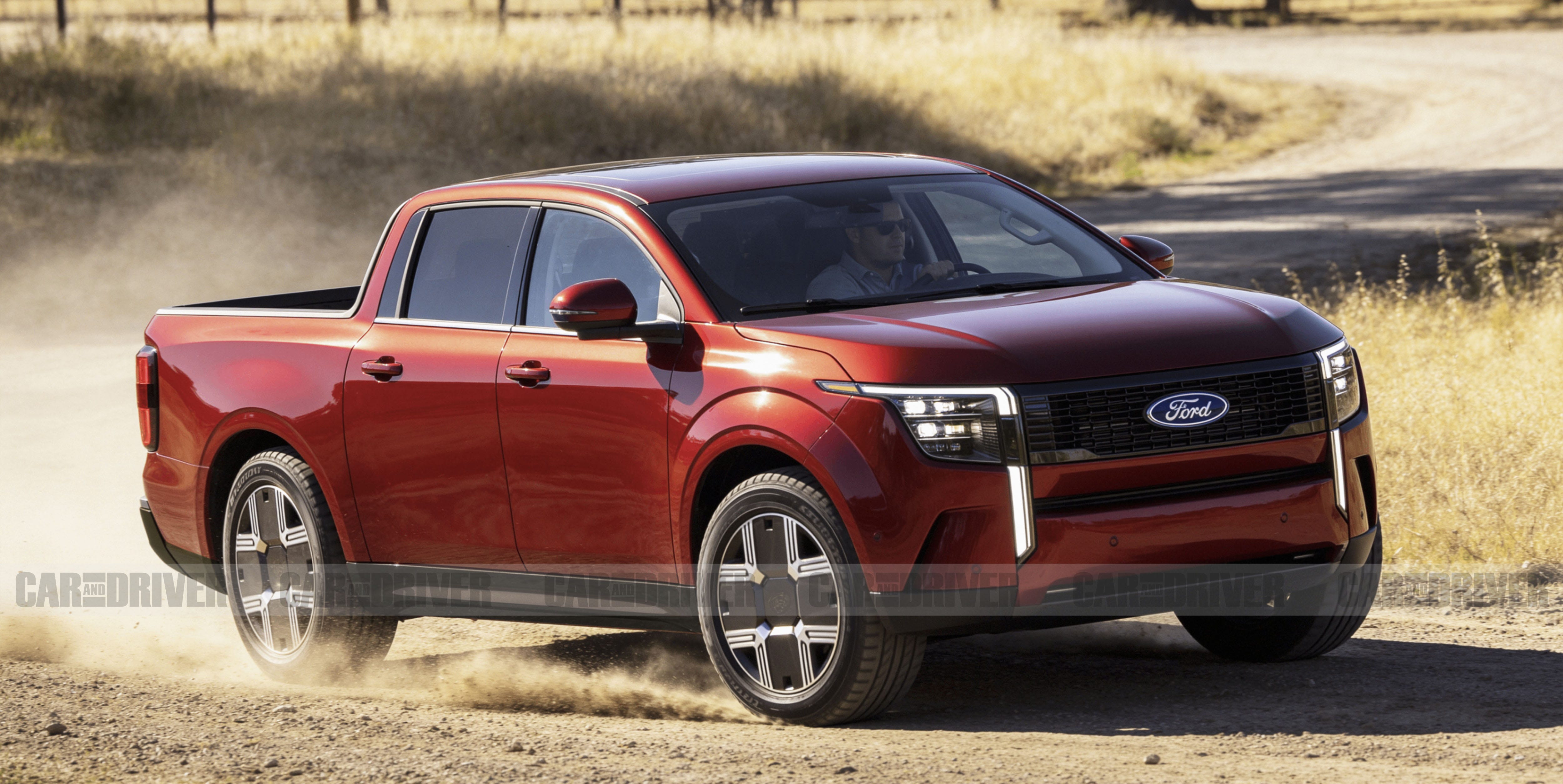
Ford is betting big that its upcoming “Universal Electric Vehicle” platform and production process will do for electric vehicles what the Model T did for automobiles — essentially make them more affordable to more people. The first of several variants to spawn from Ford’s Universal EV platform will be an electric truck that will start at $29,945 and enter production sometime in 2027. Ford has also revealed that the truck will be called the Fathom, eschewing the recognizable Ranchero moniker that many expected Ford to resurrect in the tradition of the F-150 Lightning and Maverick.

Why It Matters
Americans’ interest in new electric vehicles appears to be largely linked to affordability, at least judging by the sales slowdown that followed the Trump administration’s elimination of the federal tax credit. Currently, the Chevy Bolt and Nissan Leaf are the only EVs you can buy with starting prices below $32,000. The forthcoming Slate truck will start north of $25,000 when it goes on sale, but adding features will greatly inflate the price. The Ford Fathom has a chance to capitalize on limited direct competition and this country’s appetite for cargo-bed-toting transportation, especially since Ford will deliver on its promised sub-$30,000 starting price.
Platform
Ford’s Universal EV platform will underpin the Fathom as well as several other body styles. The modular architecture can be configured to support everything from subcompact vehicles to three-row SUVs to commercial vans. When visiting Ford’s Electric Vehicle Development Center in Long Beach, California, Car and Driver saw the UEV platform split into three parts: two large castings that form the front and rear subsections and sandwich a battery pack that acts as both a structural subassembly and the vehicle’s floor, with the body sitting atop this foundation. While the Fathom will have a footprint similar to the compact-sized Maverick, Ford claims the EV’s packaging will provide more interior volume than a Toyota RAV4 — and that’s not including the additional cargo space provided by the front trunk and cargo bed.

Compared with a traditional vehicle, Ford claims the UEV platform has 20 percent fewer parts and 20 percent fewer fasteners, and it utilizes a new type of wiring harness that’s lighter and more compact than the company’s first-generation electric vehicles. Despite slower charging speeds, Ford chose a 400-volt architecture instead of an 800-volt system, believing that’s a worthy compromise to help meet its affordable price point.
Powertrain
Ford says the Fathom will use lower-cost lithium-iron-phosphate (LFP) batteries. Battery capacity and range estimates have not yet been announced, though a 300-mile minimum seems a reasonable target. Ford has claimed the Fathom will hit 60 mph as quickly as an EcoBoost Mustang — 4.5 seconds in Car and Driver testing — but details about the electric drive motors remain unconfirmed. Images of the UEV platform clearly show a rear-mounted unit, which could power the most affordable versions, though Ford will almost certainly offer a dual-motor all-wheel-drive model as well. Specific horsepower and torque figures, along with the truck’s maximum payload and tow ratings, will be revealed before it goes on sale.
Competition
Besides potentially facing competition from within its own family — the Maverick currently starts at $29,990 — the Fathom has no direct competitor. The Slate truck is probably Ford’s closest rival, but its two-seat layout, short range, and bare-bones foundation could cap its market share. The Bolt and Leaf carry similar base prices but lack the Fathom’s useful truck bed and claimed RAV4-rivaling roominess. Higher trim levels are expected to approach or exceed $40,000, which would bring a wider set of competitors into play, though none currently combine a pickup’s practicality with that price range the way the Fathom aims to.