A Production Shift Changes the Math
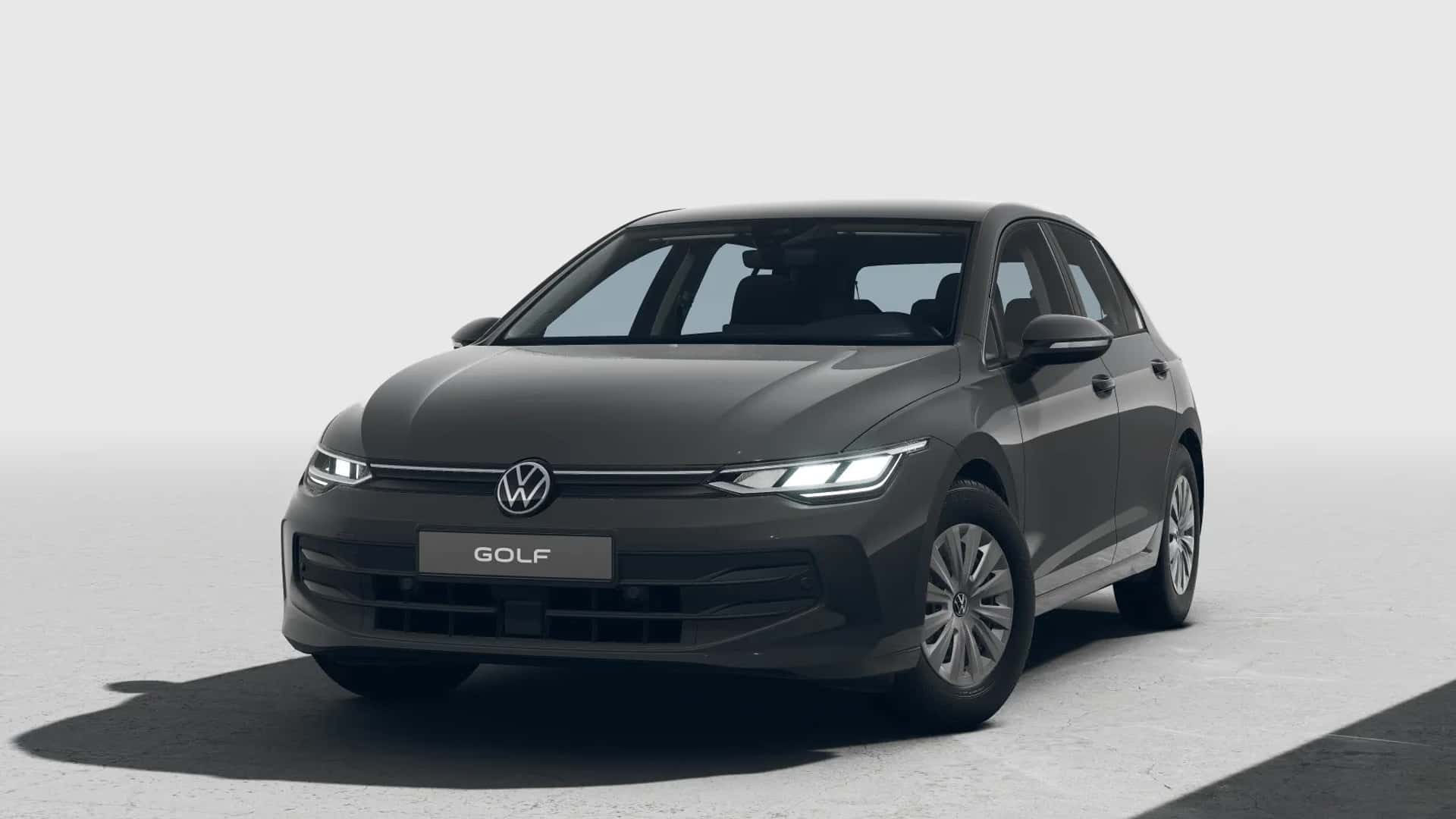
For the better part of this decade, American buyers wanting a Volkswagen Golf have had exactly two choices: spend $35,865 on a GTI or $50,730 on an R. Both are genuinely capable hot hatches, but neither is what you’d call an entry point. Meanwhile, European buyers have access to a full lineup - diesel variants, plug-in hybrids, multiple gasoline trims, wagons, and manual gearboxes across several configurations. The gap between what VW sells on one side of the Atlantic versus the other has been wide and, until recently, showed no signs of closing.
That may change once Volkswagen moves Golf production from Wolfsburg, Germany, to Puebla, Mexico, which is scheduled to happen sometime in 2027. Mexico is not new to Golf manufacturing - every previous generation of the model was built there before the eighth-gen shifted assembly to Wolfsburg. The return to Puebla is already confirmed. What isn’t confirmed, but is now firmly on the table, is whether that geographic shift will bring a broader range of Golf variants to US dealerships.
VW Group of America CEO Kjell Gruner addressed the possibility directly in an interview with Automotive News, stating that “producing it in North America opens up opportunities for other Golf variants.” He stopped short of naming specific trims. But the implication is clear enough.
What Gruner Actually Said - and What He Didn’t
Gruner’s comments were measured, and for good reason. Tariffs complicate the picture considerably. He was explicit about the challenge at the entry-level end: “The question then is: What’s the tariff from Mexico to the U.S.? A 25 percent tariff for an entry version of the Golf would be difficult.” That statement effectively rules out the absolute base model and points toward mid-tier trims with enough margin to absorb the tariff hit without making the sticker price self-defeating.
So whatever Golf variants do eventually land in the US, they won’t be the cheapest possible configuration. They’ll need to be specified well enough that a 25 percent import tariff doesn’t hollow out the business case entirely. That narrows the field without eliminating it - there’s still meaningful space between a stripped base Golf and the $35,865 GTI.
What those trims might look like in practice remains unspecified. Gruner also floated, almost parenthetically, the idea of bringing the R wagon - arguably the most desirable variant in the entire Golf lineup and one that has never been sold in the US. Whether that’s a serious option or an offhand remark is hard to gauge. Either way, it’s not something VW has committed to.
The Eighth Generation Has More Life Left Than You’d Expect
One detail that often gets lost in discussions about the Golf’s US future is how much runway the current generation still has. The Mk8 launched in late 2019 and received a facelift in early 2024. Moving production to Puebla effectively extends its commercial life well beyond what the original timeline might have suggested.
Volkswagen has confirmed it could continue selling the Mk8 even after the fully electric Mk9 arrives - and that won’t happen until 2030 at the earliest. That’s a meaningful buffer. A car entering Puebla production in 2027 could realistically stay on sale into the early 2030s, which gives VW time to amortize tooling costs and gives the US market a window to receive variants that have never been available here before.
This isn’t a short-horizon decision. VW is effectively planning around a vehicle that will span at least a decade of continuous production by the time it’s retired, and the Puebla move is part of a deliberate effort to get more value out of the platform.
The Sales Decline Provides Context
None of this is happening in a vacuum. Volkswagen’s US sales fell 13 percent in 2024 to 329,813 units. The first quarter of 2025 made things worse, with deliveries dropping 16.1 percent year-over-year to 73,803 cars. That’s a sustained slide, not a one-quarter blip, and it’s the kind of trajectory that tends to concentrate minds around questions of lineup breadth and price accessibility.
The current VW entry point in the US is the Jetta at $25,270. The Taos follows at $27,975. Both are assembled in Puebla. A standard Golf, if it arrives, would likely slot somewhere near Jetta pricing rather than Taos pricing, given the platform and positioning. That would put it somewhere in the mid-$20,000 range - a segment where VW currently has nothing with a hatchback body style.
Whether that gap is enough to meaningfully reverse the sales trend is a separate question. Hatchbacks have never dominated American buying habits the way they do in Europe. But there’s a difference between dominating a segment and simply having a presence in it, and right now VW doesn’t even have that below $35,865 in the compact car category.
Why the GTI and R Aren’t Enough on Their Own
The GTI and R are strong products. That’s not the argument here. The argument is that anchoring the entire Golf nameplate in the US to two high-priced performance variants was always a fragile strategy, and the current numbers reflect that fragility.
At $35,865, the GTI competes against a much wider set of vehicles than a standard Golf would. Buyers at that price point are cross-shopping against performance-adjacent SUVs, entry luxury sedans, and a growing list of well-equipped mainstream vehicles. The Golf name carries real equity, but it doesn’t carry enough to make the GTI insulated from those alternatives.
A Golf priced closer to $25,000–$28,000 would occupy different territory. It wouldn’t be fighting the same battles. And because both the Jetta and Taos already prove the Puebla supply chain works for that price range, the logistical argument against doing it is thinner than it might have been a few years ago.
Timing, Tariffs, and the 2027 Inflection Point
Nothing is moving before production shifts to Puebla, and that won’t happen before 2027. Gruner’s comments were forward-looking, not an announcement. There’s no launch date, no trim list, no pricing confirmation. What exists is an acknowledged opportunity and a stated intent to evaluate which variants make commercial sense given the tariff environment.
The 25 percent tariff from Mexico to the US is the central variable. It doesn’t make a Golf impossible - it makes the math more demanding. The Jetta and Taos already navigate that same tariff and remain competitively priced. The question is whether a Golf can be positioned to do the same without either losing margin or losing the price advantage that would justify its existence alongside the GTI.
That calculus will play out over the next two to three years, running parallel to whatever happens with trade policy between now and 2027. A more favorable tariff environment makes cheaper variants viable. A sustained or worsening tariff situation pushes VW toward higher-trimmed Golfs with bigger margins - or delays the whole thing indefinitely.
What’s Actually at Stake
There’s a version of this story where nothing changes. VW evaluates the options, concludes the tariff math doesn’t work at any trim level it wants to offer, and the US market stays Golf GTI and R indefinitely. That outcome isn’t irrational - it’s just not the only one available anymore.
The Puebla move makes the question live in a way it wasn’t before. Before 2027, there was no practical mechanism for the conversation. After 2027, there is. Whether VW acts on it depends on factors that are still in motion, including trade policy, sales trends, and internal decisions about how much complexity to add to the US lineup.
The Jetta starts at $25,270. Whatever Golf eventually comes to the US - if it does - will need to clear that bar or make a credible case for existing above it.