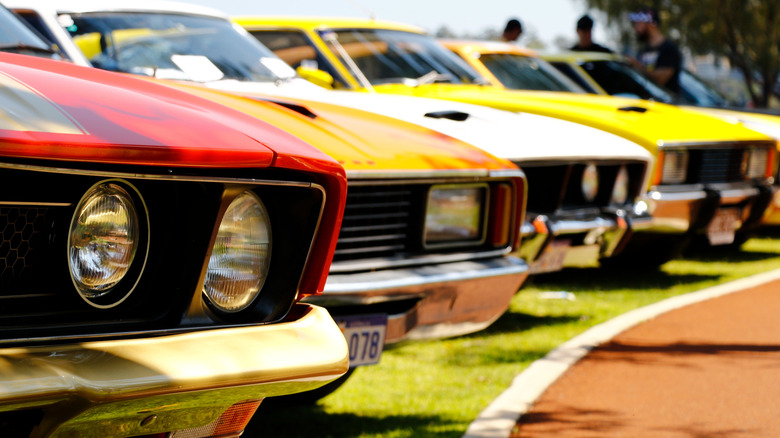
The muscle car has never been a category that thrives on rationality; that’s part of the appeal. These are cars built around noise, presence, horsepower, rarity, mythology, and the deeply human belief that a bad idea becomes a better one if it comes with a big enough V8. So, no, this is not a list of bad cars. Most of the vehicles here are excellent, and some are so desirable that saying anything negative about them may cause someone in a branded polo to begin typing angrily before reaching the second paragraph.
That’s also why they belong here. The more romanticized a car becomes, the easier it is to ignore the part where ownership starts pushing back. Sometimes that means reliability worries or track-focused handling that makes regular roads feel like punishment. Other times, it means the market value has become so ridiculous that every mile feels like a financial decision. The reputations of these beasts are so large that the reality of owning one has trouble keeping up. We can always debate when “peak muscle car” occurred - and what even counts as one anymore - but these are some legendary models that don’t always hold up cleanly under daylight, maintenance records, or insurance quotes.
Any Hellcat
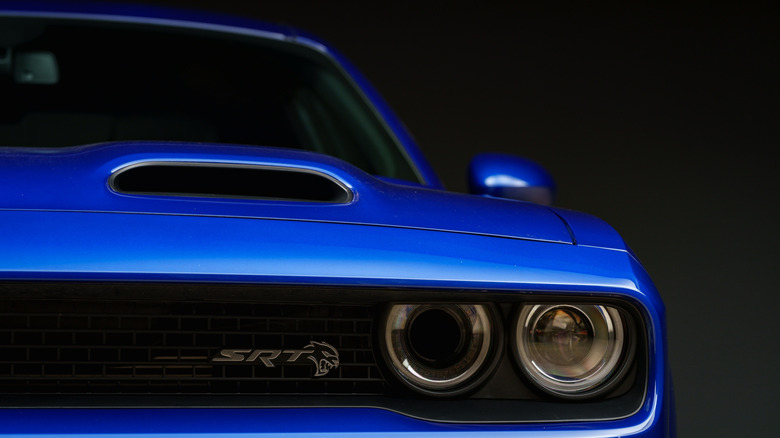
The Hellcat V8 is what happens when Dodge combines old-school American muscle and sophisticated forced induction. The result is perhaps the definitive muscle car engine of the 21st century. The formula was so successful that Dodge repeatedly returned to it, creating a growing family of Hellcat-powered vehicles that eventually included coupes, sedans, SUVs, special editions, and increasingly powerful derivatives. They were loud, theatrical, unapologetic, and often hilariously overpowered. Even people who would never buy one tend to love the fact that Dodge built them in the first place, with a few of us gradually shifting from the question of “why?” and instead asking “why not a Hellcat Pacifica?”
And yet, Dodge never really stopped chasing bigger numbers. Output and performance climbed massively from the formula’s 707-horsepower debut in the Challenger SRT Hellcat to the 1,025-horsepower Challenger SRT Demon 170, but the basic pitch stayed the same: more power, more noise, more straight-line absurdity. That is fun, obviously. It is also where the case for “overrated” starts to make sense.
Whether you were looking at a Challenger, Charger, Durango, or Demon-adjacent drag-strip science project, the Hellcat treatment often meant the same question kept getting answered while other questions became easier to ignore. How much grip does this actually have? How often can you use this much power? Is this version meaningfully better, or just more outrageous? Maybe that’s exactly what enthusiasts wanted, but then again, maybe a one-trick pony is still a one-trick pony - even if you happen to have more than 700 of them.
Ford Mustang Shelby GT350
When Ford revived the GT350 name for the 2015 model year, it built one of the most distinctive performance cars in modern American automotive history. In fact, it was so good that it started making the “muscle car” label feel a little inadequate. This was not just a Mustang with more power; it had a 5.2-liter flat-plane-crank V8 that revved higher than anyone was expecting and sounded unlike anything else wearing a Mustang badge. The GT350 was an immediate enthusiast darling, with Edmunds calling it a “muscle car for the track day-obsessed” and MotorTrend triumphantly declaring that its performance “finally delivers.” That’s why people still talk about it like it unceremoniously cracked open a weird little portal in spacetime between Detroit and Maranello.
That is also what makes the ownership reality so frustrating. The GT350’s greatness depends on trust: trust that the engine is healthy, trust that the car can handle the track work it was built to inspire, and trust that the Voodoo-powered magic will not come with a side order of anxiety. But some early owners felt that Ford’s “track-ready” marketing did not always align with the car’s real-world ability to withstand extended track use, leading to litigation over overheating concerns. None of that makes the GT350 less brilliant; it just occasionally evokes fiery images of Obi-Wan Kenobi lamenting that young Anakin could have been the chosen one. Still, if you’re not quite ready to give up on the dream, the Shelby Mustang GT350 and GT350R have returned with 830 supercharged horsepower.
Chevrolet Camaro ZL1 1LE
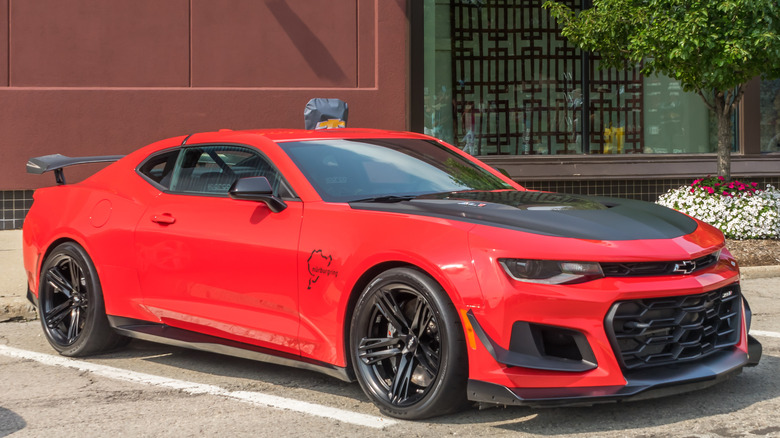
The Camaro ZL1 1LE is the sort of car that makes people sound like they are lying when they describe it accurately. This is still a front-engine Camaro, but it has a 650-horsepower supercharged V8, Multimatic DSSV dampers, serious aerodynamic hardware, and a level of track focus rarely seen in a production muscle car. Chevy even developed the package around Goodyear Eagle F1 Supercar 3R tires created specifically for the ZL1 1LE. It was a Camaro that could embarrass other powerful machines while still looking like something a suburban dad might consider daily driving.
The issue is that the ZL1 1LE’s greatness is extremely specific. On the track, that specificity is what makes it brilliant. On normal roads, it can become the kind of quality-of-life burden that has you questioning whether the days of track use are worth how much you’re punishing yourself across every bump and crack between home and the post office. It could be said that Chevy understood the assignment too well, with a result that just happens to be something that people might not be looking for in a muscle car. After all, this is a segment where looking cool while cruising around town is at least part of the point.