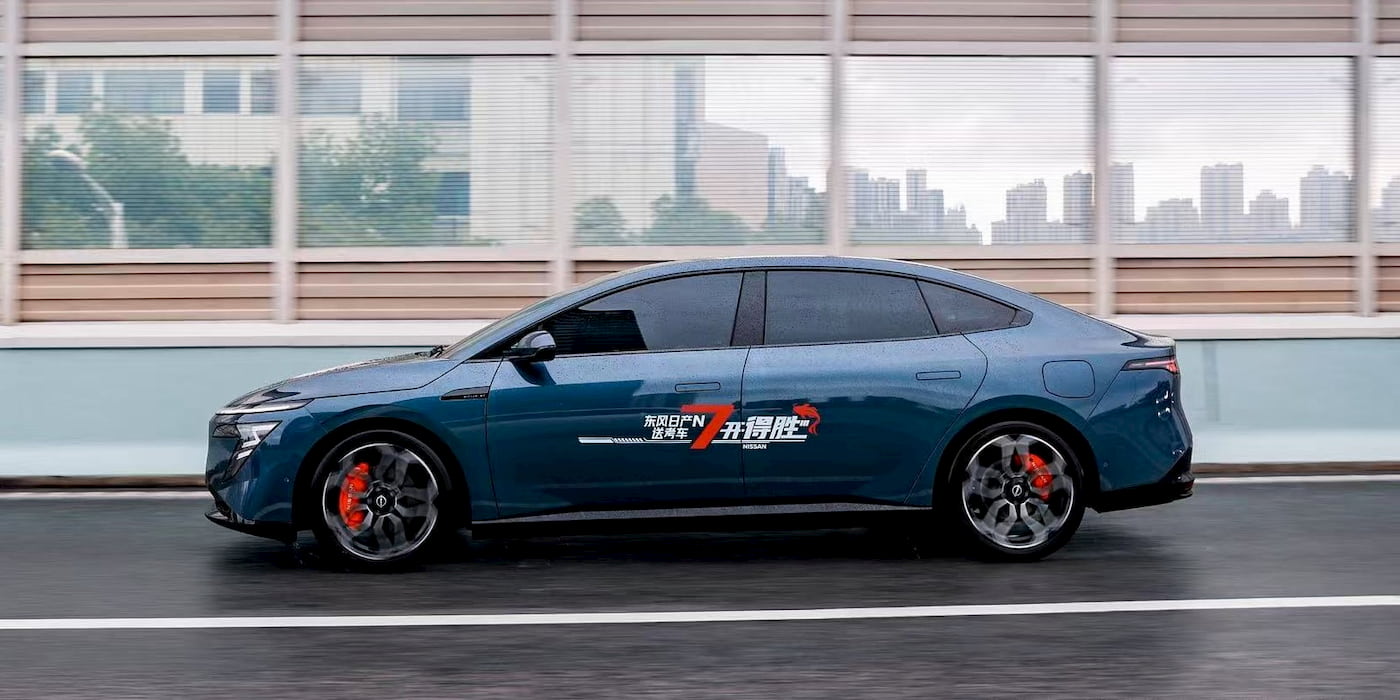
After announcing a new three-year collaboration with Nissan to advance low-cost solid-state EV batteries, Gelion’s technology may be the key to leveling the playing field with China.
Nissan Takes Aim at China with Solid-State EV Batteries
Nissan is betting on breakthrough battery technology as part of its comeback plan, as the struggling Japanese automaker looks to turn things around.
The three-year project, called Cost-effective, Resilient Solid-state Li-S, is a collaboration between Gelion, Nissan Technical Center Europe (NTCE), and the University of Oxford.
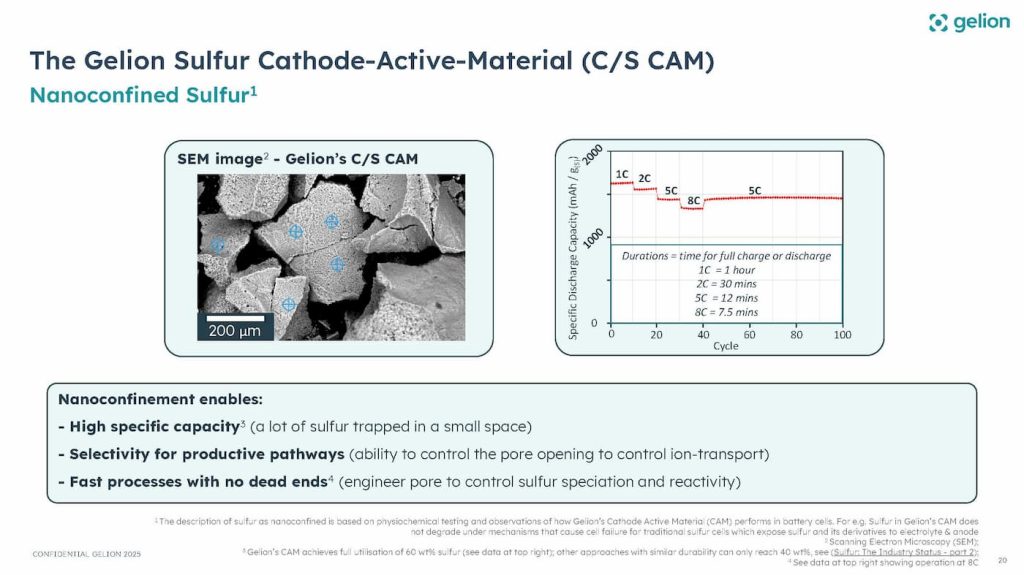
By combining Gelion’s NES (Nano-Encapsulated Sulfur) sulfur-based cathode active material with Nissan’s solid-state battery development capabilities, the project aims to develop the next generation of EV batteries that are safer, more affordable, and longer-lasting.
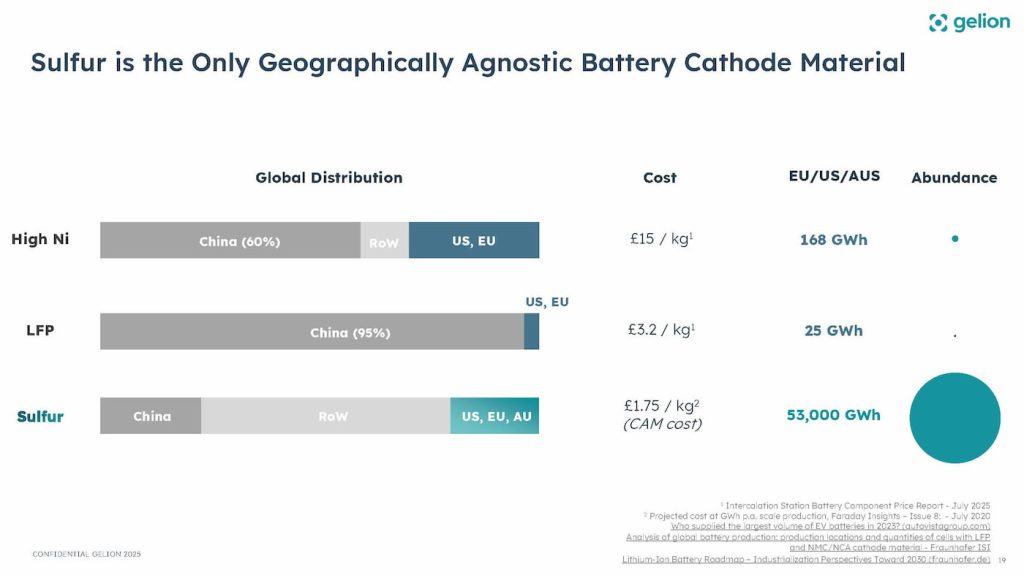
Gelion’s NES technology swaps expensive nickel and cobalt with low-cost, widely abundant sulfur. Nissan, Gelion, and the University of Oxford will pool resources to build a high-power, high-energy solid-state lithium-sulfur battery pack.
 (Source: Gelion)
The total cost of the project is approximately $4.5 million (£3.4 million). Gelion said it will receive around $3.2 million (£2.4 million) in combined grant funding.
In a research report published Thursday and entitled “Cheaper Than China,” Longspur Capital Limited stated:
Gelion has successfully developed a battery cathode material platform that delivers the benefits of high-performance lithium ion but that could be produced in the West more cheaply than China today, leveling the playing field in this strategically important area.
Gelion has proven its sulfur-based cathode technology as an improvement on both lithium-ion and sodium-ion batteries.
As the report highlights, “Perhaps the biggest battery technology development for high-performance batteries will be solid-state electrolytes, and Gelion is developing cathodes here as well.”
 (Source: Gelion)
The company aims to introduce a commercial prototype in FY2027, aligning with Nissan’s goal of launching its first EV powered by solid-state batteries in 2028. Nissan will use Gelion’s sulfur technology “to keep its solid-state EV offering competitive against Chinese competition,” according to Longspur Capital.
Gelion UK and Europe president and team lead Adrien Amigues said “this project has the potential to be a game-changer for the UK, Nissan and Gelion,” adding, “Our technology is particularly well-suited to solid-state batteries.”
Nissan opened its first all-solid-state EV battery production line at its Yokohama plant in Japan in January 2025 and is partnering with US-based LiCAP Technologies for mass production.
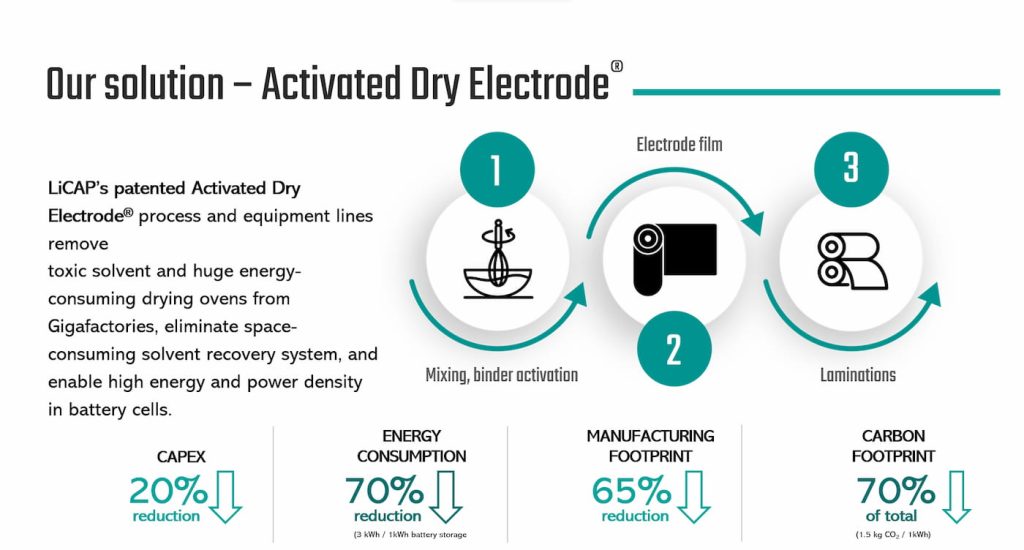 LiCAP’s patented Activated Dry Electrode process (Source: LiCAP Tech)
Using LiCAP’s Activated Dry Electrode technology, which eliminates the need for solvent drying, Nissan believes it has a “significant advantage” in cost and efficiency.
Nissan has yet to reveal detailed technical specifications, but several manufacturers have claimed that solid-state batteries can double the driving range compared to traditional lithium-ion batteries, enabling over 620 miles (1,000 km) on a single charge.
Electrek’s Take
While Nissan continues securing new partnerships to develop and produce solid-state batteries, several Chinese manufacturers are already testing prototypes.
Over the next few months, several Chinese brands, including BYD, plan to begin deploying EVs with solid-state batteries.
In April, BYD Group’s chief scientist Lian Yubo said that all-solid-state EV batteries have entered “a critical stage,” but stressed that challenges to mass production remain.
BYD is also advancing sulfide-based all-solid-state batteries, with plans to begin building them in limited batches next year and ramp up to mass production by 2030.
Sun Huajun, CTO of BYD’s battery division (Shenzhen BYD Lithium Battery Co.), explained that sulfide electrolytes last longer and are more stable than traditional liquid lithium-ion batteries, enabling safer, faster charging and longer battery life.
While Nissan’s new collaboration will support investment in its Sunderland plant in the UK, the company announced Wednesday that it signed an MoU with Chery International to potentially produce vehicles for the Chinese automaker at the same facility.
FTC: We use income earning auto affiliate links. More.