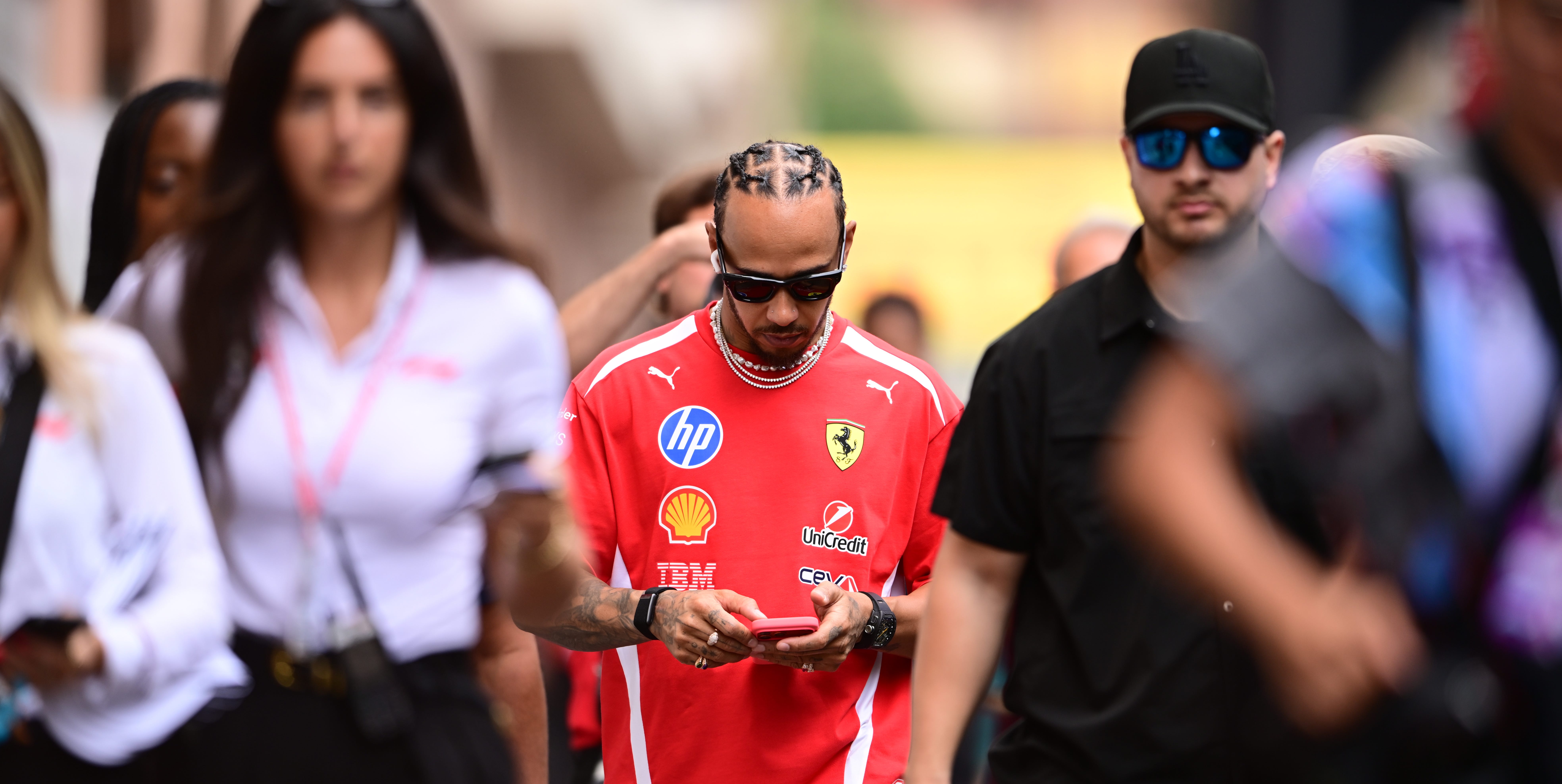
Scuderia Ferrari’s rivals on the Formula 1 grid expected Maranello to be competitive at the Monaco Grand Prix this weekend, mainly due to a combination of the SF-26’s good form in slow corners and the absence of long straights - an area where the car has been lacking this year. The theory was backed up by reality on Friday, with Charles Leclerc leading Lewis Hamilton in FP1. The positions were then reversed, as Hamilton was quickest in the second practice and top overall on the day.
It was a statement of intent by the team, with the program running to plan and no unforeseen issues getting in the way on a track made even busier than past years by the presence of 11th team Cadillac and its two cars. The gap to the opposition was much smaller in the second session - Max Verstappen led the pursuit in both - but afterwards, team principal Fred Vasseur was pleased with what he’d seen.
“In Monaco, the challenge is always to anticipate the next session, the evolution of the grip for the drivers and for the team,” said the Frenchman. “And you have always to adjust a little bit everything. Now I think the second session was not bad, it’s just that it was difficult to put a lap together for everybody. We have to keep in mind that it was mega challenging [with] the traffic [in] Monaco; and now with ten percent more cars on track, it’s more than ten percent more difficult.”

Intriguingly, Vasseur also suggested that, after all the talk about power units and energy management in recent months, the focus has moved back to the familiar story of tires and how best to prepare them for a quick lap. “Now [that] we have a kind of convergence of understanding of the car, tires are becoming again predominant into the performance,” he said. “And with so many cars on track, it’s difficult to do a proper out-lap. Sometimes you are pushing, and you have to slow down, and so on. I think it will be the key for [qualifying] to be able to do a proper out-lap to arrive in the right window, and to do a clean lap later on. It will be a challenge. And I was not expecting that it will be an easy life…”
“You have a kind of convergence of performance over the session,” he added. “You can’t expect to be four-tenths faster than everybody all the weekend. It means that we have to make some steps, perhaps in the approach of the grip and the evaluation of the grip for the next session. Anticipation will be the key for tomorrow.”
The Ferrari Dynamic
Within the Ferrari camp, a fascinating dynamic has developed. On the one hand is Leclerc, the local hero for whom this race means so much, and who finally won it in 2024 after so much frustration. He also comes into this weekend having earlier this week extended what was already a long contract with the Scuderia, with both parties reaffirming their faith in each other.

Then there is Hamilton, who struggled through a difficult first year at Ferrari in 2025 but has now hit the sweet spot, and is so much happier with life than he was last season. The two drivers were pretty evenly matched over the day, split by 0.226 seconds in FP1 and 0.111 seconds in FP2. To be fair to Leclerc, he was far from happy due to a brake issue - and a lack of faith in your brakes is not what you want in Monaco.
“Unfortunately, it’s been two weekends that I’m facing some issues on the brakes, and I’m just struggling on my side with the brakes at the moment,” Leclerc said. “So, we are trying to find a solution. We haven’t found, so far, a solution. We’ll keep working on that, and try to make sure that for tomorrow we do a step forward on that. In FP2, I just lost a little bit of confidence for that, but we are working on that.”
Hamilton’s Measured Optimism
Leclerc’s struggles shouldn’t detract from a great performance from Hamilton at a track where confidence and experience count for so much. Nevertheless, he sounded cautious at the end of Friday. “It’s been a positive day overall, and the car felt quite good right from the first laps,” he said. “The team did a solid job with the changes we made between the two sessions, and we were able to work through our program without any major issues. Monaco is always a very different challenge, with the bumps and the close proximity of the barriers, so it’s not easy to find the right balance and put everything together.”

He admitted that there’s room for improvement: “There is still performance to be found, and tonight we’ll focus on the details, because the margins are very small here - and there’s plenty of work to do ahead of qualifying.”
It is way too early in the weekend to make too many assumptions, but pole position and a win for Hamilton in Monaco would be quite a story after last year’s struggles saw some write him off. He has worked hard to get himself into this position: adjusting to a different way of working, pushing car development in a direction that he favors, and building a strong engineering team around him.
“What most people don’t realize is the work that goes on that you have to do in the background,” Hamilton said in Monaco on Thursday. “Of course, you see drivers in the past, like Kimi [Raikkonen], for example, who just joined the team and drive the car - and sometimes it works, sometimes doesn’t. For me, I’ve come to a team that, as I mentioned last year, has everything it needs to succeed. But it’s just needing things, the pieces of the puzzle put in the right place, in order for it to all come together.”