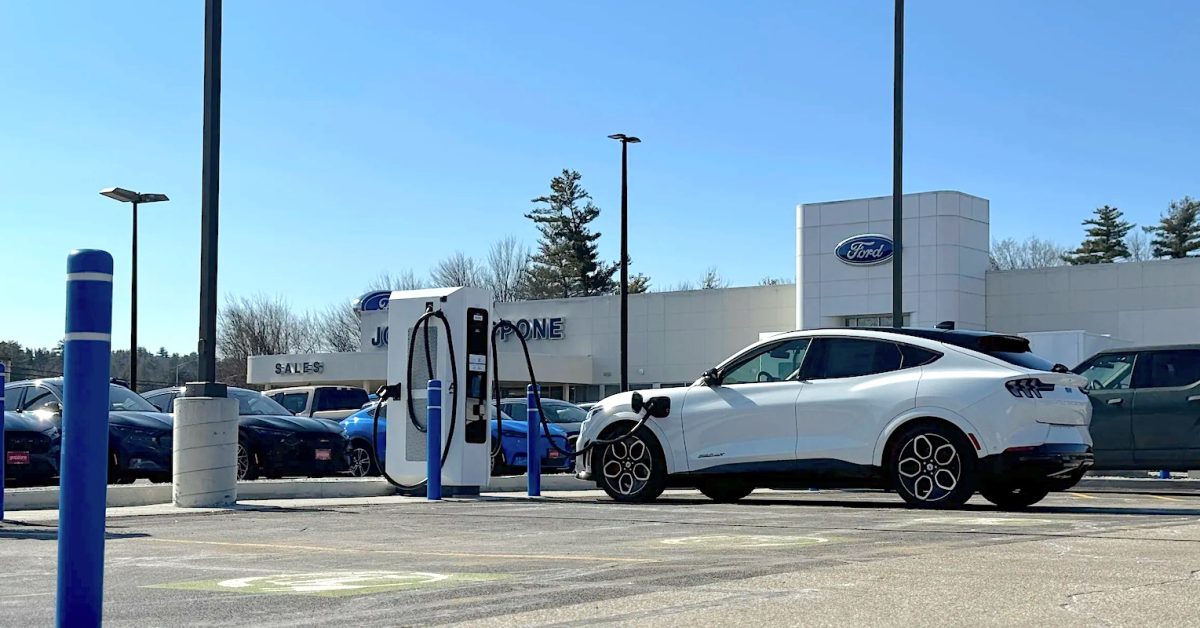
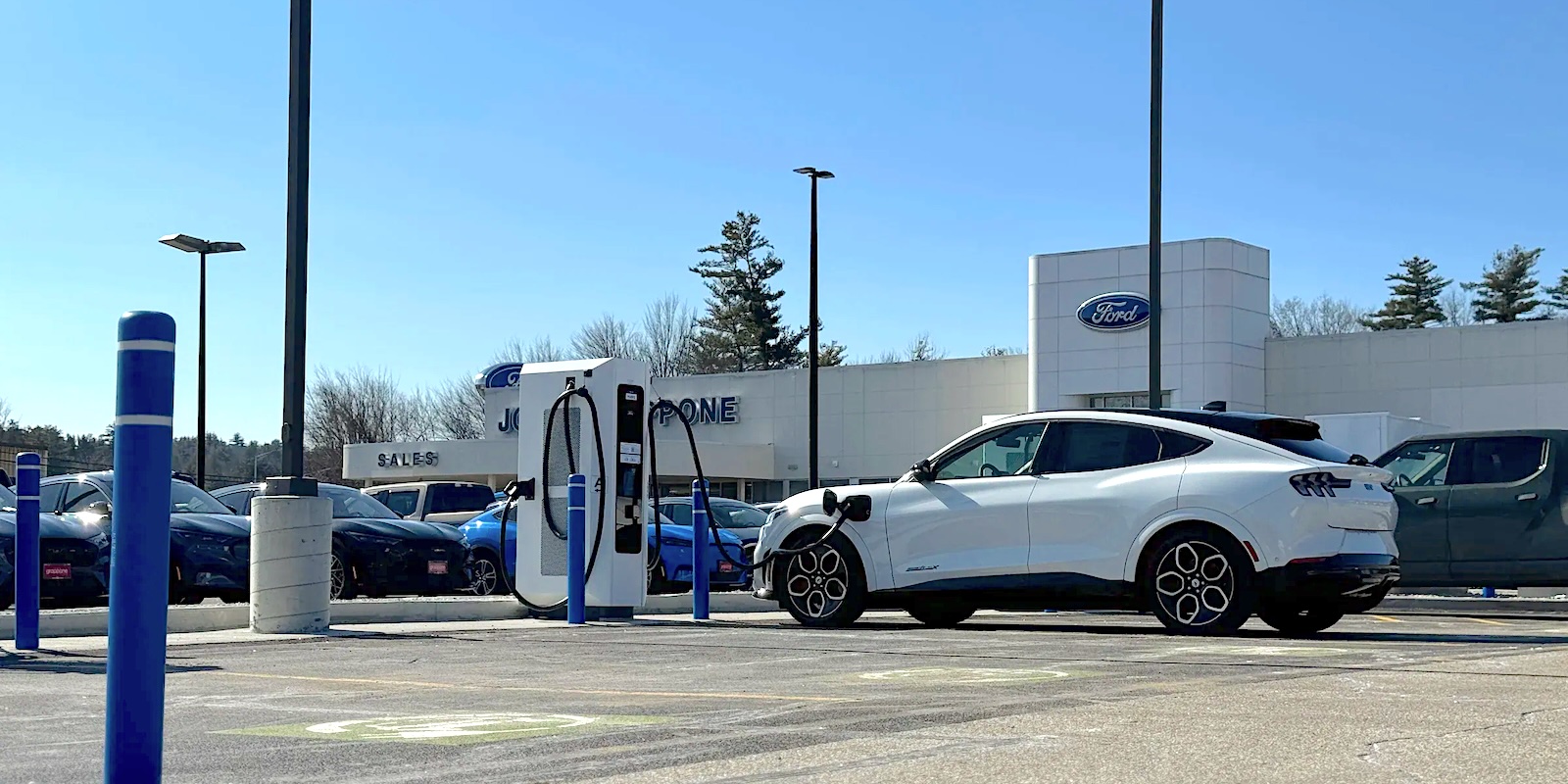
Drivers opening an EV charging app for the first time today will be presented with thousands of so-called “public” chargers at local car dealers. Once they arrive, however, the store’s customers, store hours, security gates, and Wild West pricing can turn what should be a routine charging stop into a frustrating ordeal. For first-time EV drivers, that doesn’t just reflect poorly on the dealer - it reflects poorly on the EV itself. And we need to fix it.
The EV industry has spent years counting up how many chargers it’s put in the ground, but drivers’ experiences count for more - and last week, Plug & Play EV’s Steve Birkett took to LinkedIn to call out his local Hyundai dealer in Union, NJ for charging a ridiculous $15 per kWh to top off his IONIQ 5.
As bad as that was, Steve’s frustration didn’t end there. While he specifically mentions that Ford stores have been better than most, he says that far too many dealers limit access to their charge ports in service of their inventory vehicles’ and service customers’ charging needs. Closed gates outside of business hours and generally underwhelming charging speeds were also called out as issues.
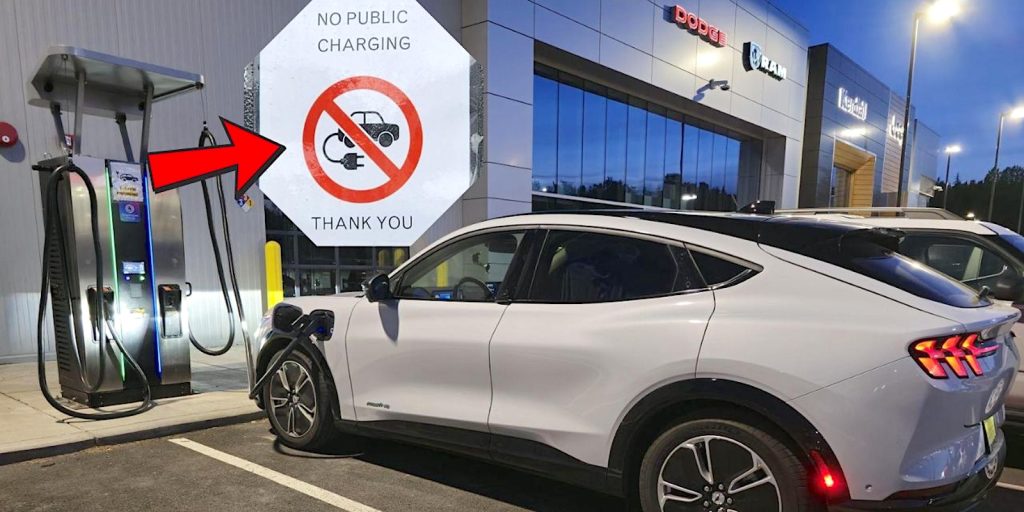
Even worse, he noted that a number of area dealerships that had listed their ports as “public” were actively discouraging public use with signs and stickers designed to turn people away.
Thank You, for Nothing
Don’t get me wrong, I understand the libertarian caveat emptor vibe - it’s just not my scene. If there is a loophole in the law that will allow a business to fleece a customer, the franchise auto dealers will find it, and EV charging is no exception.
Unlike gas stations, EV charge point operators (CPOs) in many states aren’t required to clearly advertise what they’ll charge before a driver plugs in - not in the same way that gas stations are, with clearly legible signage visible from the street. Without those kinds of regulations in place, it’s all too easy for unscrupulous CPOs to take advantage of EV newcomers.
As such, there needs to be a lot more regulation on these things. If you’re operating a charge point as, or as part of, a for-profit business that absolutely requires chargers as a cost of doing business - as car dealers do - you should have to go above and beyond in order to qualify for incentive dollars.
And, frankly, it should be incredibly easy for those incentive programs to claw those dollars back if the CPO steps out of line.
It’s Not Just Car Dealers
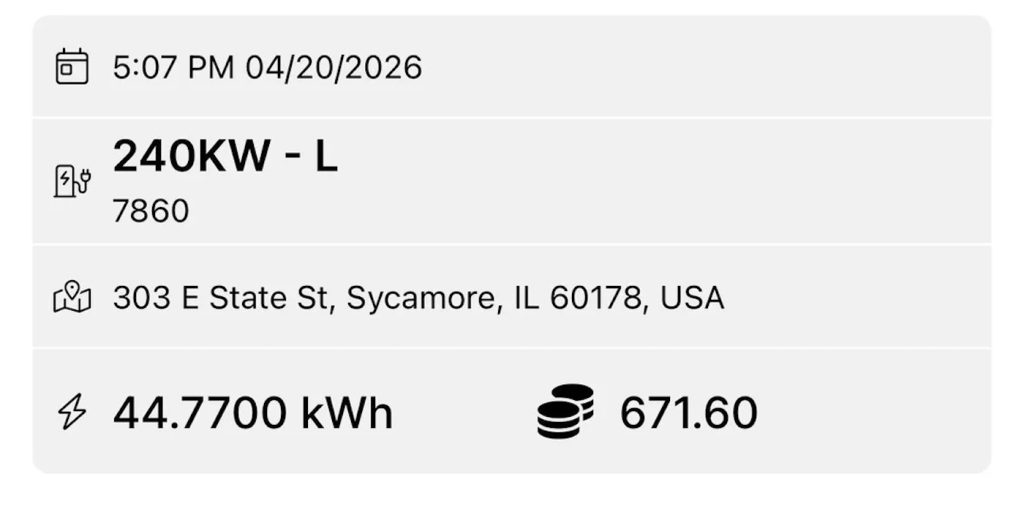
The problem doesn’t end with car dealers. Last month, a Redditor called C1rcuitBoard posted their experience at an MES-branded EV charging station in Sycamore, IL - and they didn’t catch on until after racking up a whopping $671.60 electric fuel bill.
“When I charged they were not displaying updated pricing in the app, so I didn’t notice the issue,” writes C1rcuitBoard. “I emailed the company to see if it was a mistake and I could get a refund, but the company doubled down and even sent me their power bill to ‘prove’ they weren’t overcharging me.”
All of this bad behavior targets people who are learning how to navigate a new fuel choice - one that is undoubtedly, objectively, and verifiably better for people and planet - and does so with tools their victims probably helped pay for. Worse, it will probably take a good long while before the people who got fleeced trust that new fuel choice again.
With that in mind, it’s time to propose some basic ground rules for “public” chargers receiving public funds:
- Unfettered access - for at least 16 hours per day, public chargers must be prioritized for public use, with inventory, service, or fleet vehicles taking a back seat
- Transparent pricing - just like gas stations, CPOs should post illuminated signs with digits 16–24″ tall, clearly indicating per-kWh pricing
- Capped energy markups - cap profits at some percentage of real energy costs, and audit CPOs frequently to verify compliance
- An aggressive clawback mechanism - failure to maintain the above standards (and current NEVI uptime requirements) will result in incentive dollars being pulled, through utility bills, tax penalties, or some other mechanism the business in question can’t easily escape
Head to the comments section and share what you think of those ideas, and what rules you believe could make a meaningful difference in ensuring that public charging programs actually serve the public - and not just the CPOs.
Note: Steve Birkett has been invited to share his stories on an upcoming episode of Quick Charge. If all goes well, that interview will be posted in a few days.